
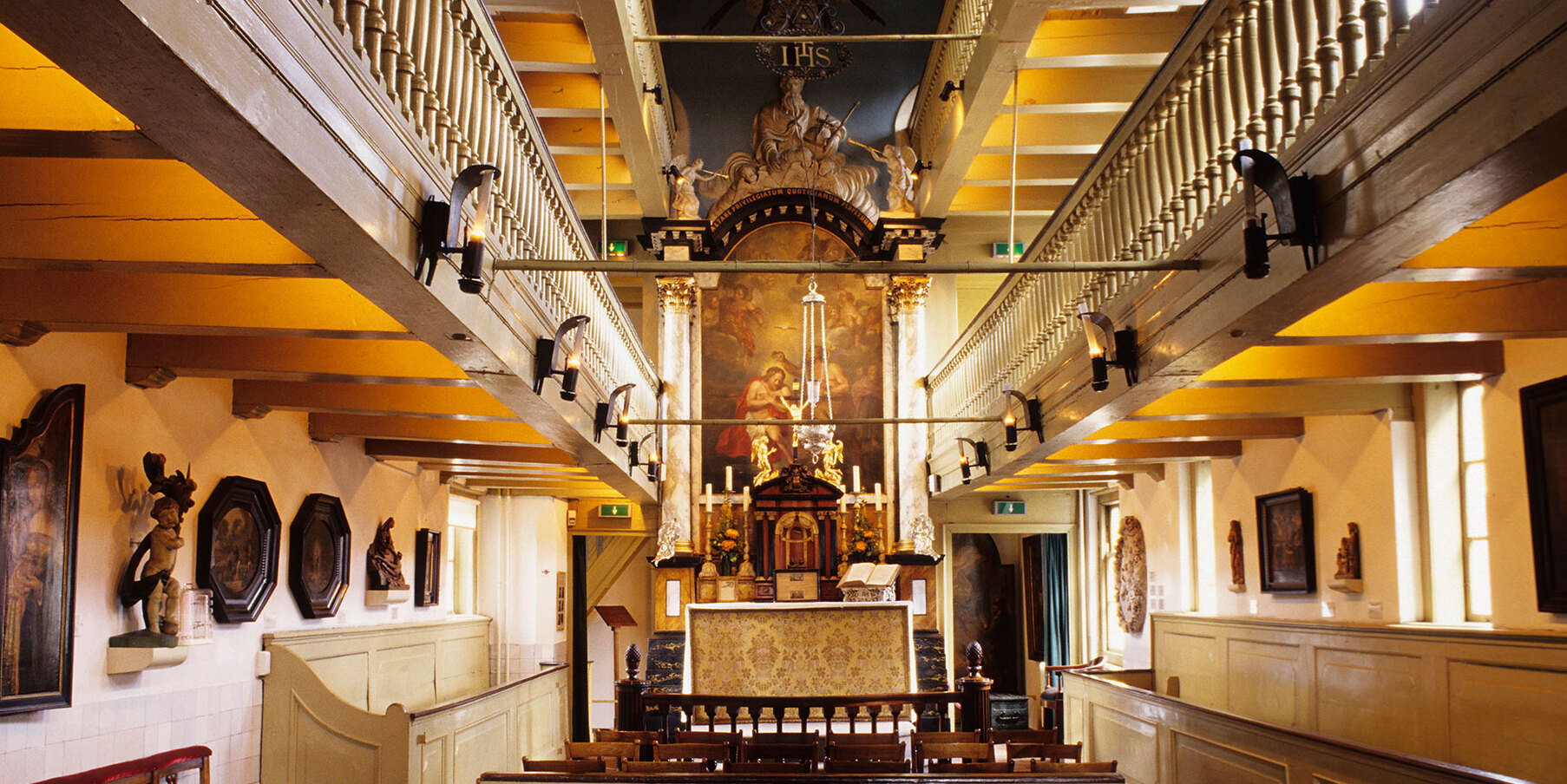

Tucked away in the vibrant heart of Amsterdam's Red Light District, the Our Lord in the Attic Museum offers a quiet retreat into the past, revealing a secret that has been kept for centuries. This hidden gem, known locally as Ons' Lieve Heer op Solder, is a perfectly preserved 17th-century canal house that conceals a clandestine Catholic church in its attic, a relic of the city's complex religious history.
In the mid-17th century, during the Protestant Reformation, Catholicism was officially banned in the Dutch Republic. However, Amsterdam, known for its tolerance and diversity, allowed for a peculiar arrangement. Catholics could practice their faith, but only if their worship places were discreetly hidden from public view. In 1661, a wealthy Catholic merchant named Jan Hartman purchased the house and transformed its top floors into a house church, complete with an altar, pews, and a small organ. This ingenious adaptation allowed the Catholic community to continue their religious practices in secret until religious freedom was restored in the 19th century.
The architecture of Our Lord in the Attic is a testament to the ingenuity of its creators. The exterior of the canal house is typical of the era, with its classic Dutch gabled facade, but inside, visitors are taken on a journey through time. The church itself, painted in hues of soft pink and gold, is a marvel of compact design. The altar is adorned with intricate woodwork and paintings, while the ceiling soars unexpectedly high, creating a sense of openness and reverence. Among the notable artworks is the painting of the Last Supper by Jacob de Wit, an esteemed Dutch painter of the period, which adds an air of solemnity and grace to the space.
The local culture surrounding the museum is as dynamic as its history. Amsterdam is a city of contrasts, where liberalism and tradition coexist harmoniously. The Red Light District, known locally as De Wallen, is a testament to this duality. While the area is famous for its nightlife and adult entertainment, it also hosts vibrant cultural festivals and events. The Grachtenfestival, or Canal Festival, celebrates the city's rich musical heritage with performances often held in historical venues like this one, adding layers to its cultural significance.
No visit to Amsterdam would be complete without indulging in the local gastronomy. While the museum itself does not offer food, the nearby streets abound with cozy cafes and eateries. Traditional Dutch treats like stroopwafels—thin waffles filled with caramel syrup—and bitterballen, deep-fried meatballs, are must-tries. For a more substantial meal, the classic stamppot, a hearty dish of mashed potatoes and vegetables, is a local favorite, often paired with a pint of Dutch beer or a glass of Genever, the precursor to gin.
Beyond its historical and cultural allure, the museum holds a trove of lesser-known curiosities. One fascinating detail is the confessional hidden behind a sliding panel, a reminder of the secrecy that enveloped Catholic practices during the Reformation. Another intriguing feature is a small, concealed door leading to the organ loft, offering a behind-the-scenes glimpse into the church's musical past. Visitors often miss the tiny, ornate details throughout the house, such as the intricately carved banisters and the original Delft tiles lining the fireplaces, each telling its own story of craftsmanship and devotion.
For those planning to visit, practical tips can enhance the experience. The museum is open year-round, but the best time to visit is during the spring and autumn months when the crowds are smaller, and the weather is mild. Be prepared to climb narrow, steep stairs, as the building is preserved in its original form, which may pose challenges for those with mobility issues. Look out for the special exhibitions that delve deeper into the hidden lives of Amsterdam's past residents, often featuring artifacts and personal stories from the era.
In a city brimming with history, the Our Lord in the Attic Museum stands out for its unique narrative of resilience and faith. It invites visitors not just to observe, but to reflect on a time when secrecy and survival went hand in hand, offering a poignant reminder of the enduring spirit of Amsterdam's Catholic community.


