
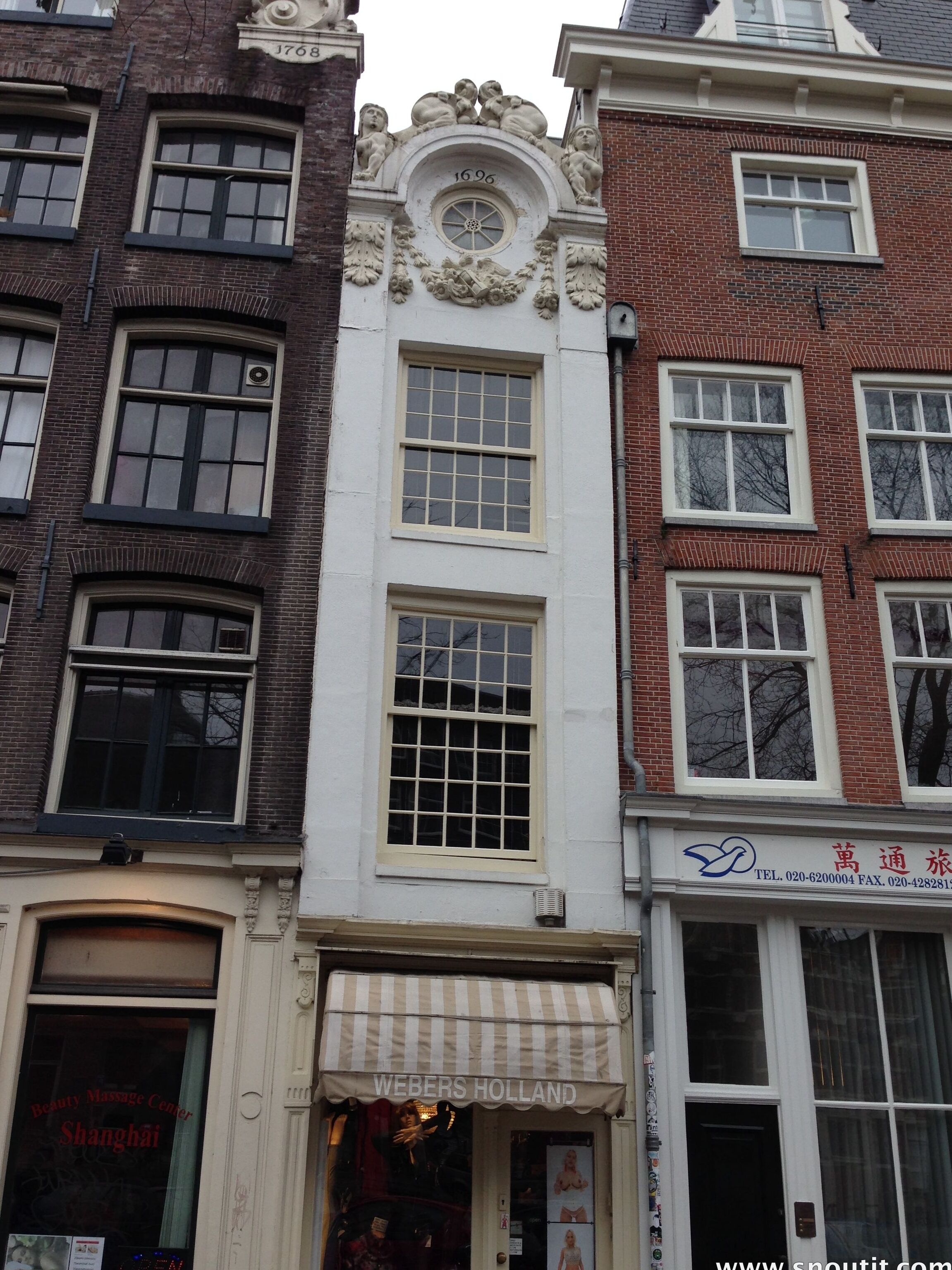

Nestled along the rippling canals of Amsterdam, Singel 7 draws curious onlookers with its intriguing claim to fame: a façade that measures just over a meter wide. While the house at Singel 7 might not be the narrowest house from front to back, its slender profile captures the imagination, offering a tantalizing glimpse into the city's rich architectural history.
The story of Singel 7 begins in the 17th century, during the Dutch Golden Age, a period when Amsterdam was a bustling hub of trade and prosperity. With limited land space in the burgeoning city, builders and residents became adept at creating narrow, yet functional, homes. This era saw the rise of the canal houses, characterized by their tall, narrow designs that maximized interior space while minimizing street frontage. This architectural ingenuity was largely a response to the taxation policies of the time, which taxed homes based on canal-facing width, leading to the creation of these iconic narrow structures.
Architecturally, Singel 7 is a testament to this era's inventive spirit. Its façade, painted a classic Dutch brick red, stands as a slender slice of the past amongst its wider brethren. The house, like many in Amsterdam, features a steep gabled roof and large windows that allow light to flood its interior. While the back of the house reveals a more conventional width, the narrow front adds an element of surprise and charm, embodying the whimsical yet practical nature of Dutch urban planning.
Amsterdam is a city of vibrant culture and tradition, and the canals around Singel 7 are no exception. The area is alive with the spirit of the city, where modern life intertwines seamlessly with history. Nearby, the Bloemenmarkt, the world's only floating flower market, bursts with color and fragrance, a nod to the Netherlands' deep affection for tulips and horticulture. The city's cultural calendar is packed with festivals such as King's Day, celebrated every April 27th, where the streets are flooded with orange-clad revelers, and the Amsterdam Light Festival, an annual event that transforms the canals into a glowing gallery of light installations.
For those keen to explore the gastronomy of the area, Amsterdam offers a wealth of culinary delights. The city's food scene is a reflection of its diverse population and rich history. Near Singel 7, visitors can savor traditional Dutch treats such as stroopwafels – thin waffle cookies filled with a caramel-like syrup – and haring, raw herring often enjoyed with onions and pickles. For a more substantial meal, stampot, a comforting dish of mashed potatoes with vegetables and sausage, offers a taste of Dutch home cooking.
Among the lesser-known curiosities of Singel 7, one finds a playful urban legend. It is said that during its construction, the narrow façade was a clever marketing ploy by its owners to attract attention and create a lasting landmark – a strategy that seems to have worked remarkably well. Another quirk lies in the building’s interior, which, despite its narrow exterior, opens up into a cozy and surprisingly spacious residence, a perfect metaphor for Amsterdam itself—small in size but immense in character.
For those planning a visit, the best time to experience Singel 7 and its surrounding area is during the late spring or early autumn. These seasons offer mild weather, ideal for exploring the canal-side streets and soaking in the vibrant atmosphere without the summer crowds. It's advisable to wander on foot or rent a bicycle, as this allows for a more intimate appreciation of the area's intricate details and hidden gems.
When visiting Singel 7, take a moment to appreciate the craftsmanship and historical narrative encapsulated within its narrow walls. Look beyond the façade to see how this slender house fits into the broader tapestry of Amsterdam's architectural and cultural landscape. Singel 7 is more than just a narrow house; it's a window into the innovative spirit and enduring charm of the Dutch capital, inviting all who pass by to pause, ponder, and appreciate the unique beauty of Amsterdam's heritage.


