
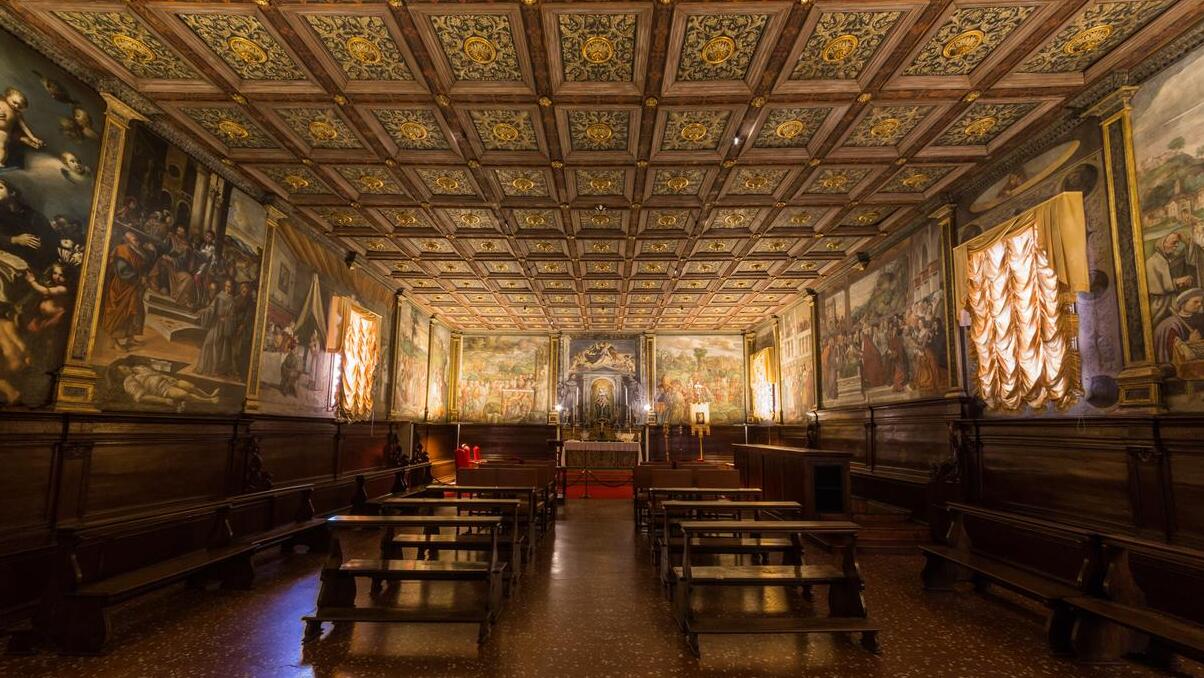

Nestled in the heart of Padua, the Scuola del Santo, affectionately known as the Scoletta, stands as a testament to the city's deep-rooted reverence for St. Anthony. Founded in the early 15th century, this majestic building serves as the seat of the Confraternity of St. Anthony, a group dedicated to the veneration of this beloved saint. The lower section was constructed around 1430, while the upper part was completed in 1504, marking a significant period of architectural and artistic development in Padua.
The Scoletta is not merely an architectural marvel; it is also a treasure trove of artistic significance. The Prioral Hall, part of the sixteenth-century addition, showcases an impressive cycle of 18 paintings that vividly depict scenes from the life and miracles of St. Anthony. Among these masterpieces are three early works by the renowned artist Tiziano Vecellio, better known as Titian, created in 1511. These paintings—"St. Anthony makes an infant talk," "The jealous husband stabbing his wife," and "St. Anthony reattaches the foot to a young man"—are not only striking in their execution but also pivotal in the evolution of Renaissance art. Following an extensive restoration completed in 2006, the hall has regained its former glory, inviting visitors to experience the vibrant colors and intricate details that Titian crafted with such passion.
Beyond its artistic contributions, the Scuola del Santo embodies the rich cultural traditions of Padua. The Confraternity of St. Anthony plays an active role in the local community, organizing various events and festivals throughout the year. One of the most significant celebrations is the Feast of St. Anthony, held every June 13th. This vibrant festival attracts thousands of devotees and tourists alike, featuring processions, music, and traditional food stalls that fill the streets with the aroma of local delicacies.
Speaking of food, Padua offers a delectable array of gastronomic delights that reflect its rich heritage. The region is known for its bigoli, a thick spaghetti-like pasta often served with a rich duck sauce. Another local favorite is risotto al tastasal, a savory rice dish flavored with seasoned pork. For dessert, you cannot miss the torta di frutta, a fresh fruit tart that showcases the abundance of local produce. Pair your meal with a glass of Bardolino, a light red wine that complements the region's culinary offerings perfectly.
As you explore the Scoletta and its surroundings, keep an eye out for lesser-known curiosities that add depth to your visit. For instance, many visitors miss the small altar dedicated to the Miracle of the Fish, a lesser-known miracle attributed to St. Anthony, which emphasizes his role as a protector of fishermen. Additionally, the adjacent Basilica di Sant'Antonio, a stunning example of Romanesque architecture, holds the tomb of St. Anthony himself, drawing pilgrims from all over the world.
For those planning a visit, the best time to explore the Scuola del Santo is during the spring and early autumn months, when the weather is mild, and the gardens surrounding the building are in full bloom. Arrive early in the day to avoid the crowds and take your time to admire the intricate details of the frescoes and the serene ambiance of the Prioral Hall. Don’t forget to check the schedule for any special events or exhibitions that might be taking place during your visit.
In conclusion, the Scoletta and the Scuola del Santo offer a captivating glimpse into the artistic, cultural, and spiritual heart of Padua. Whether you’re an art enthusiast, a history buff, or simply looking to immerse yourself in local traditions, this gem is a must-see. For a personalized itinerary that helps you uncover more of Padua’s hidden treasures, consider using the Secret World app.


