
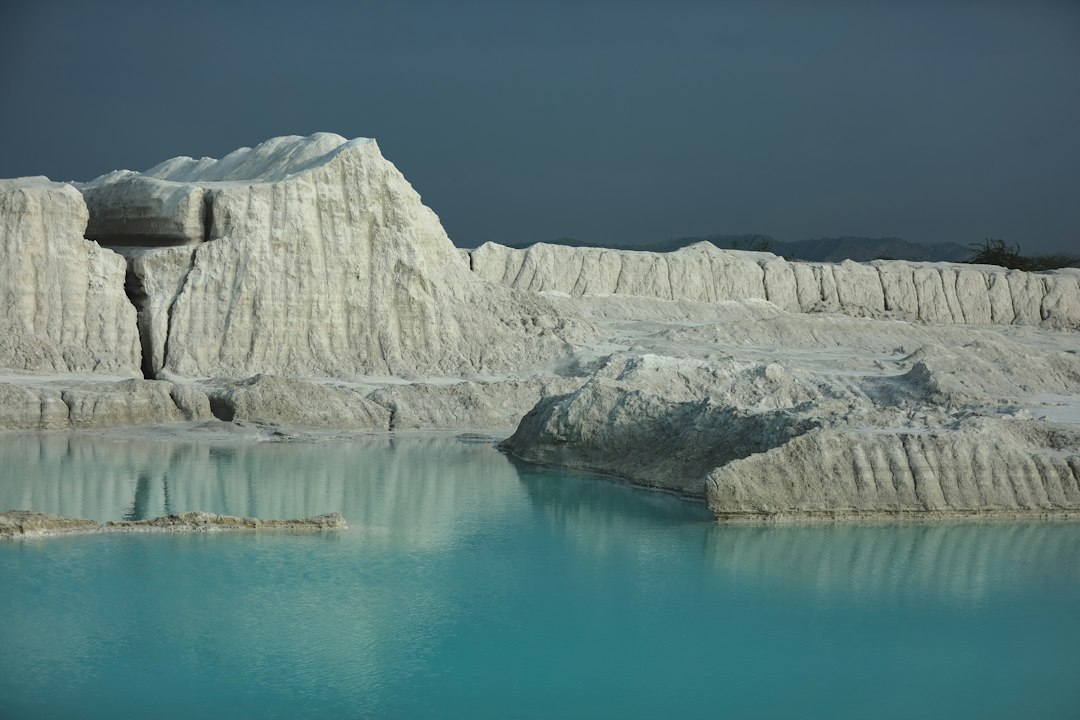

The water flows hot from the earth, laden with calcium carbonate, and as it flows down the slope, it deposits layer upon layer of white mineral, gradually building terraces that seem sculpted from ice. In Pamukkale, in the province of Denizli, in southwestern Turkey, this geological process active for millennia has created one of the most recognizable natural formations of the eastern Mediterranean: petrified waterfalls of milky white, interrupted by thermal pools of turquoise water at a constant temperature of about 35 degrees Celsius.
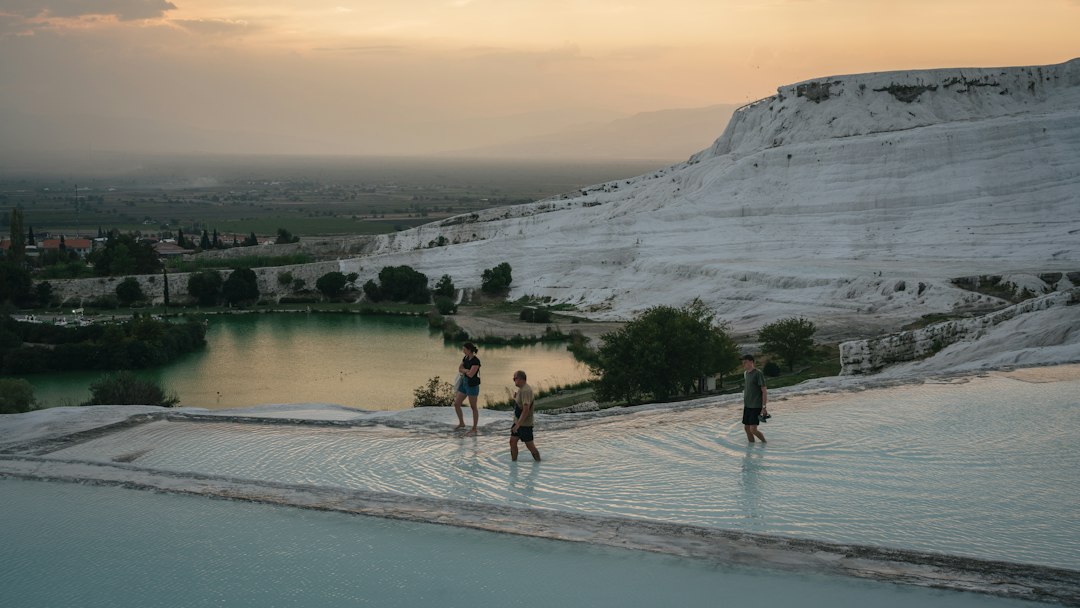
The site extends for about 2,700 meters in length and reaches a height of about 160 meters above the valley floor. Walking barefoot along the edges of the terraces — as required by the access rules to protect the mineral surface — means feeling underfoot a granular and porous texture, at times slippery where the water still flows actively. The afternoon light transforms the white deposits into almost luminescent surfaces, while the pools reflect the sky in shades that range from aquamarine to deep blue.
A fragile ecosystem built by water
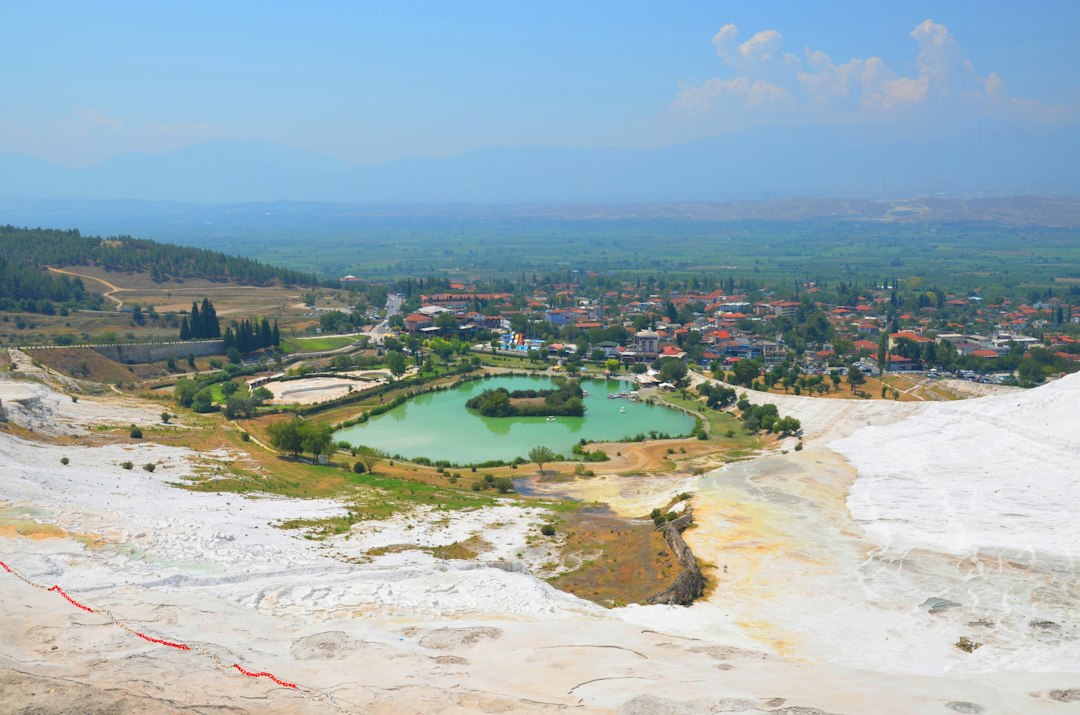
The hot springs that feed the travertines of Pamukkale are part of a larger hydrothermal system, linked to the geological activity of the Aegean region. The water, rich in calcium bicarbonate, precipitates the mineral as soon as it comes into contact with open air, depositing calcite in shapes that over time take on the appearance of horizontal stalactites or natural basins with raised edges. This process is slow but continuous: the travertines are alive, in the sense that they change shape over the years.
The aquatic biodiversity within the pools is limited by the high mineral concentration and constant temperature, but some species of microscopic algae and thermophilic microorganisms colonize the wetter surfaces, contributing to shades of green and orange visible in the areas less frequented by visitors. Around the site, the vegetation of the Denizli plain — olive trees, wild figs, and Mediterranean scrub — hosts birds typical of western Anatolia, including the kingfisher and several species of raptors that soar over the valley during the cooler hours.
Hierapolis and the Ancient Human Presence
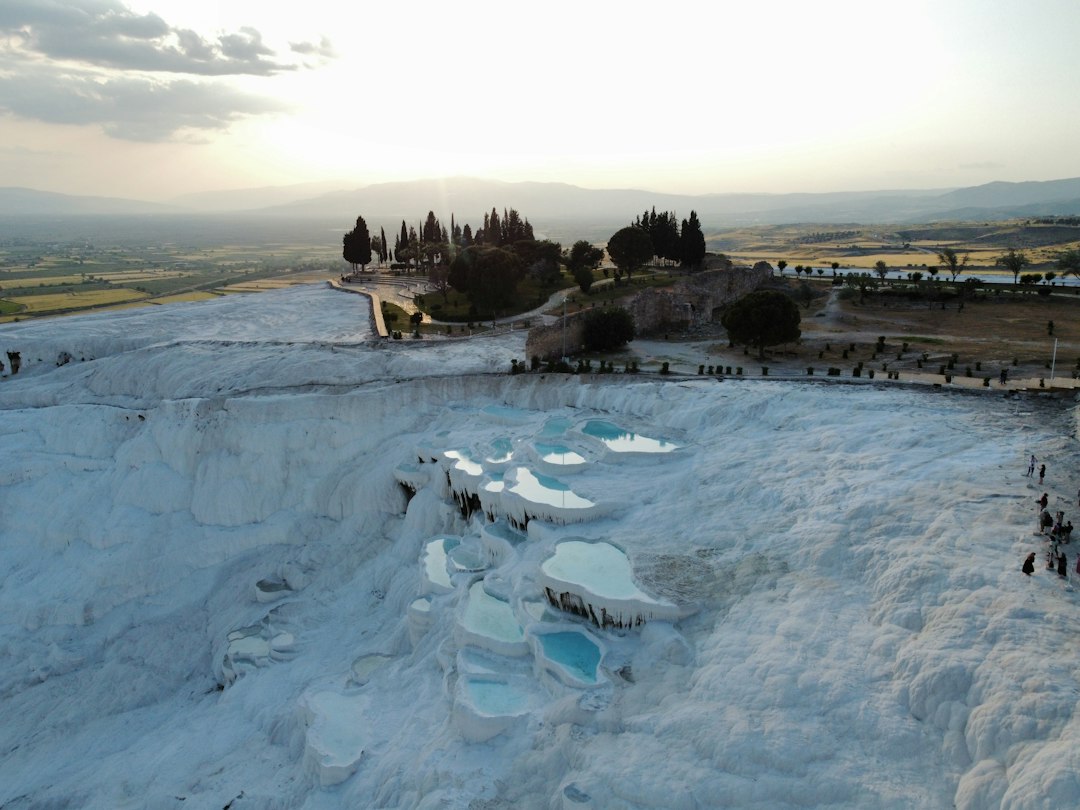
Adjacent to the travertines are the ruins of Hierapolis, a city founded in the 2nd century BC under the Attalid dynasty of Pergamon and later developed during the Roman era. The Romans recognized the therapeutic value of the thermal waters and built baths, temples, and a theater that is still largely preserved today. The Cleopatra's Pool, within the archaeological site, allows visitors to swim in a natural thermal basin among columns and submerged fragments of Roman architecture — a tangible experience of the millennia-old relationship between this place and human use of its waters.
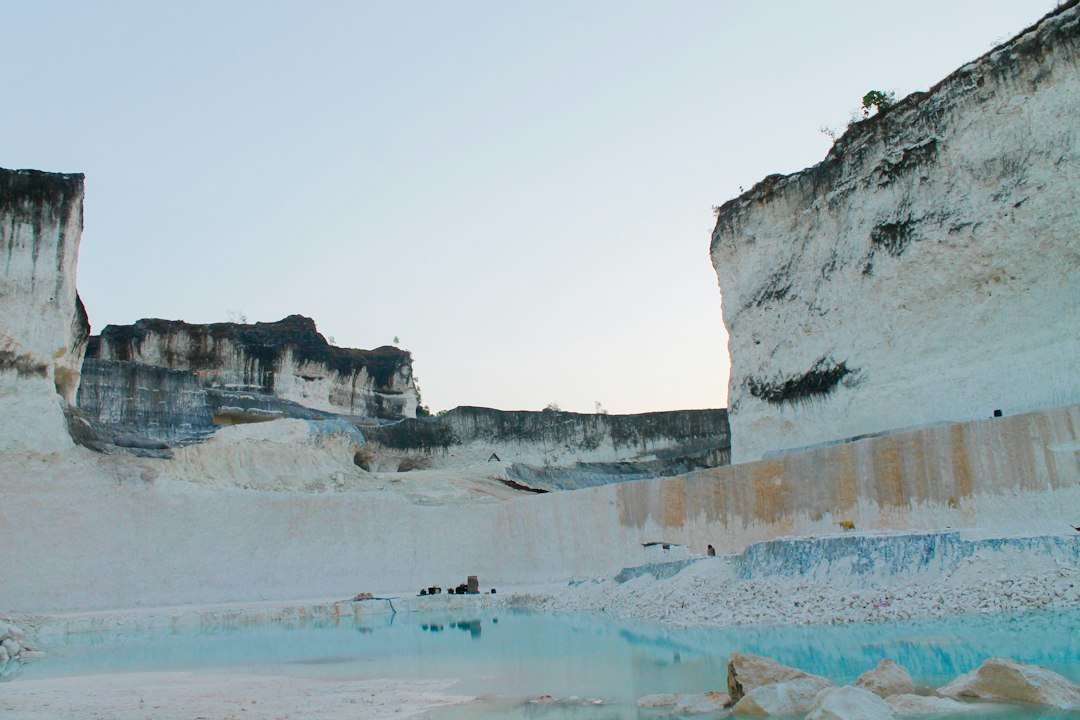
The site was recognized as UNESCO World Heritage in 1988, a classification that has led to progressive restrictions on direct access to the terraces, specifically to limit the damage caused by mass tourism in previous years. In some recent periods, parts of the terraces have been closed to allow for the natural recovery of mineral deposits.
Nature and sensation on site
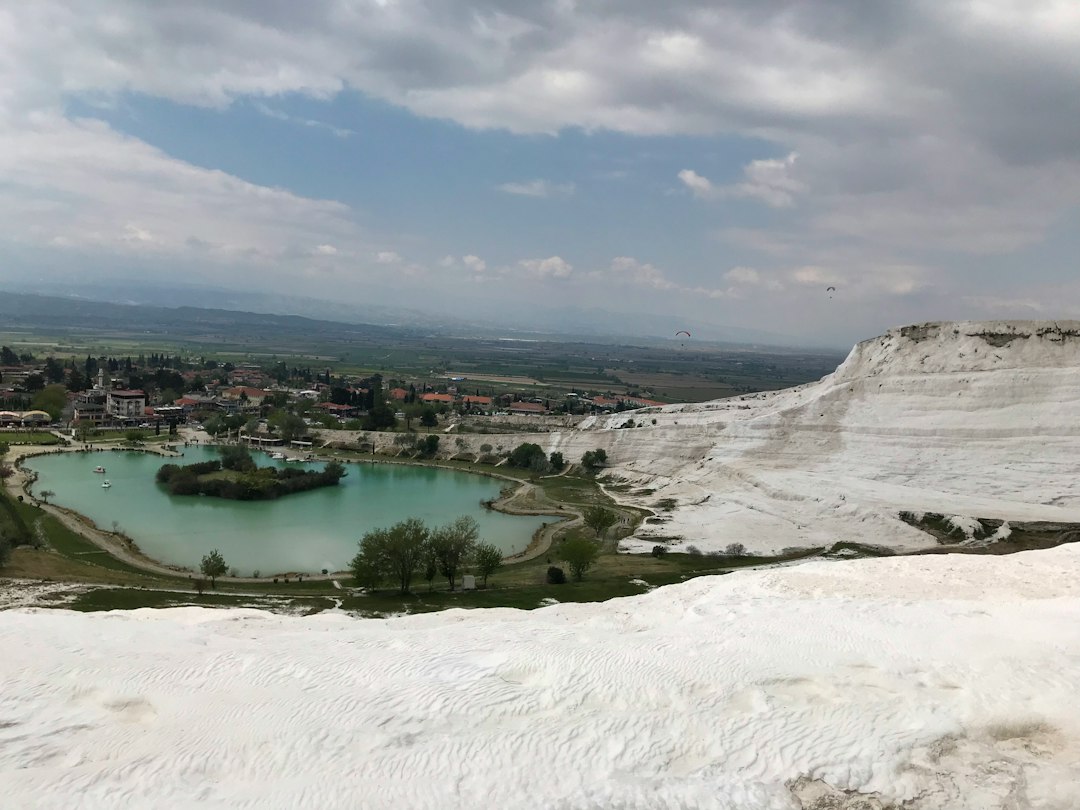
What strikes you about Pamukkale is not only the overall view — which photographs capture quite faithfully — but the tactile and sensory feeling of the environment. The slightly sulfurous smell of the hot water, the contrast between the warmth of the pools and the cooler air in the spring or autumn mornings, the sound of water flowing between the terraces creating small natural waterfalls: these are details that belong to the direct experience of the place.
The wildlife in the immediate surroundings is discreet but present. In the early hours of dawn, before the official opening to the public, it is easier to observe birds landing on the rock formations and small mammals moving at the edges of the site. The surrounding plain, with its cultivated fields and undeveloped natural areas, offers a landscape context that amplifies the sense of the geological isolation of the site.
Practical tips for the visit
The best time to visit Pamukkale is at dawn or in the early morning, when the slanting light enhances the white of the terraces and there are still few visitors. In the high summer season, the site quickly gets crowded after 9:00 AM. The main access is from the lower gate, but many visitors prefer to descend from the upper entrance after visiting Hierapolis, walking down the terraces — a direction that offers more open views of the Denizli plain.
It is mandatory to take off your shoes before walking on the active terraces: bringing a waterproof bag to store them is useful. The combined entrance ticket for Pamukkale and Hierapolis can be purchased at the ticket offices at the entrance, and the price varies depending on the season — it is advisable to check the updated rate on the official website of the Turkish Ministry of Culture before departing. Regular dolmuş (shared minibuses) depart from Denizli, about 20 kilometers away, reaching the village of Pamukkale in less than thirty minutes.


