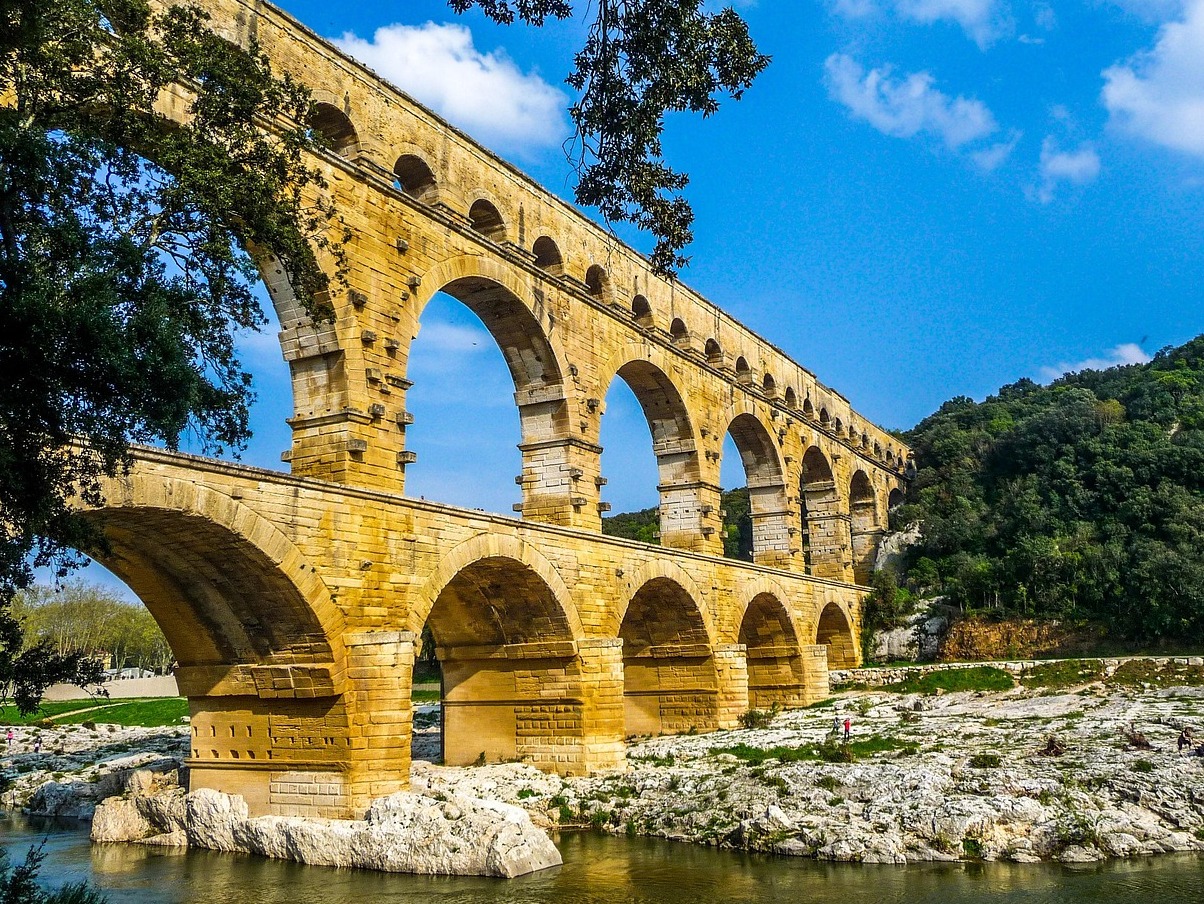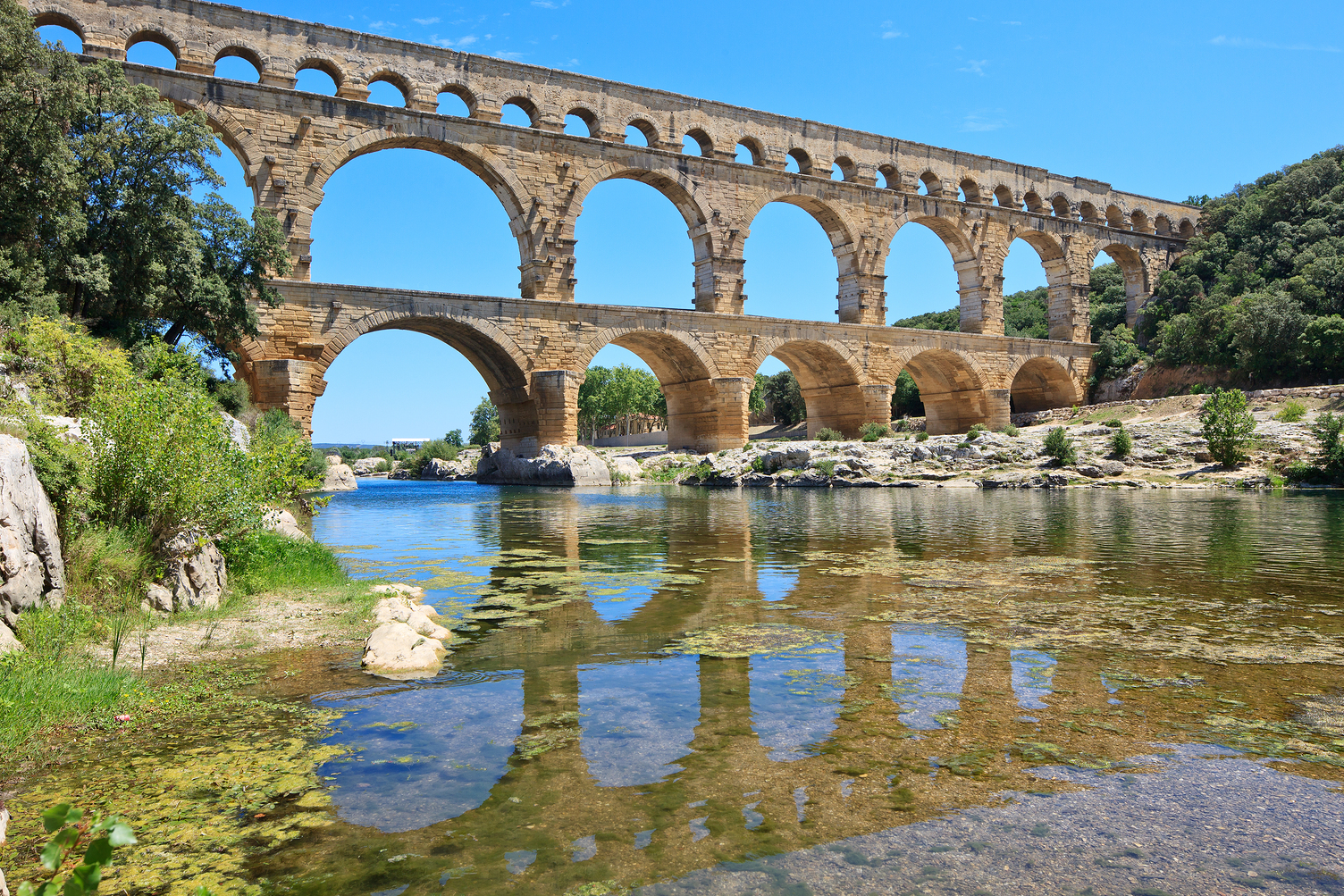


The Pont Du Gard, a stunning ancient Roman aqueduct, stands as a testament to the engineering prowess and artistic vision of the Roman Empire. Located in Vers-Pont-du-Gard, this UNESCO World Heritage site was built in the 1st century A.D. to transport water from Uzès to the city of Nîmes. Spanning 50 kilometers and reaching a height of 50 meters, the aqueduct bridge is a marvel of architecture, featuring three tiers of arches that elegantly blend functionality with beauty.
### History and Origins The origins of the Pont Du Gard date back to 40-60 A.D., during the reign of Emperor Claudius. Initially constructed as part of a larger aqueduct system, its primary role was to carry water from the springs of Uzès to the bustling Roman city of Nîmes, approximately 50 kilometers away. The aqueduct enabled the flourishing of Nîmes, which became a significant urban center in ancient times, showcasing Roman engineering and culture.
Over the centuries, the Pont Du Gard has witnessed significant historical events, from its use in the Roman Empire to its decline in the Middle Ages when it was no longer maintained. Interestingly, the bridge also served as a toll bridge during the 18th century, facilitating trade and travel across the Gardon River.
### Art and Architecture The Pont Du Gard is a stunning example of Roman architecture and engineering. Its design showcases the Romanesque style, characterized by the impressive use of arches and robust stonework. The bridge stands at an impressive 50 meters high, making it one of the tallest Roman aqueduct bridges still in existence.
Constructed with around 50,400 tons of limestone, the stones were meticulously cut and placed without the use of mortar, highlighting the advanced techniques employed by Roman builders. The three tiers of arches are not only functional but also add to the aesthetic grandeur of the structure, with the uppermost level featuring smaller arches that create a delicate contrast against the robust lower levels.
### Local Culture and Traditions The area surrounding the Pont Du Gard is rich in Provençal culture and traditions. The nearby village of Vers-Pont-du-Gard hosts various local festivals that celebrate the region’s history, such as the Festival of the Aqueduct, which features reenactments and performances that bring ancient history to life. Additionally, local artisans often showcase their crafts, from pottery to textiles, offering visitors a glimpse into the vibrant culture of Southern France.
### Gastronomy No visit to the Pont Du Gard would be complete without indulging in the local cuisine. The region is famous for its Provençal specialties, including ratatouille, a vegetable medley that embodies the flavors of the South, and tapenade, a spread made from olives that pairs beautifully with local breads. Côtes du Rhône wines, particularly those from the nearby vineyards, offer a perfect complement to the local dishes, allowing visitors to savor the essence of Provence. Don’t miss trying the Picholine olives, a local variety known for their distinctive flavor.
### Lesser-Known Curiosities While many visitors marvel at the beauty of the Pont Du Gard, few know that it was originally painted in bright colors, giving it a striking appearance. The bridge also served as a source of inspiration for artists and writers throughout history, including Victor Hugo, who praised its grandeur in his writings. There's also an interesting story about how a local population used the aqueduct as a refuge during times of conflict, showcasing its significance beyond mere water transport.
### Practical Visitor Information The best time to visit the Pont Du Gard is during the spring (April to June) or fall (September to October) when the weather is mild, and the crowds are smaller. The site offers various amenities, including guided tours, walking paths, and picnic areas that allow visitors to soak in the surroundings.
Make sure to look closely at the intricate stonework and the alignment of the arches, which demonstrate the precision of Roman engineering. The nearby museum offers deeper insights into the history and significance of the aqueduct, making it a worthwhile stop for anyone interested in ancient history.
Visiting the Pont Du Gard is not just a journey through ancient architecture; it’s an exploration of a culture that has shaped modern France. To enrich your experience in Vers-Pont-du-Gard, consider using the Secret World app for a personalized itinerary that will guide you through this stunning region.