
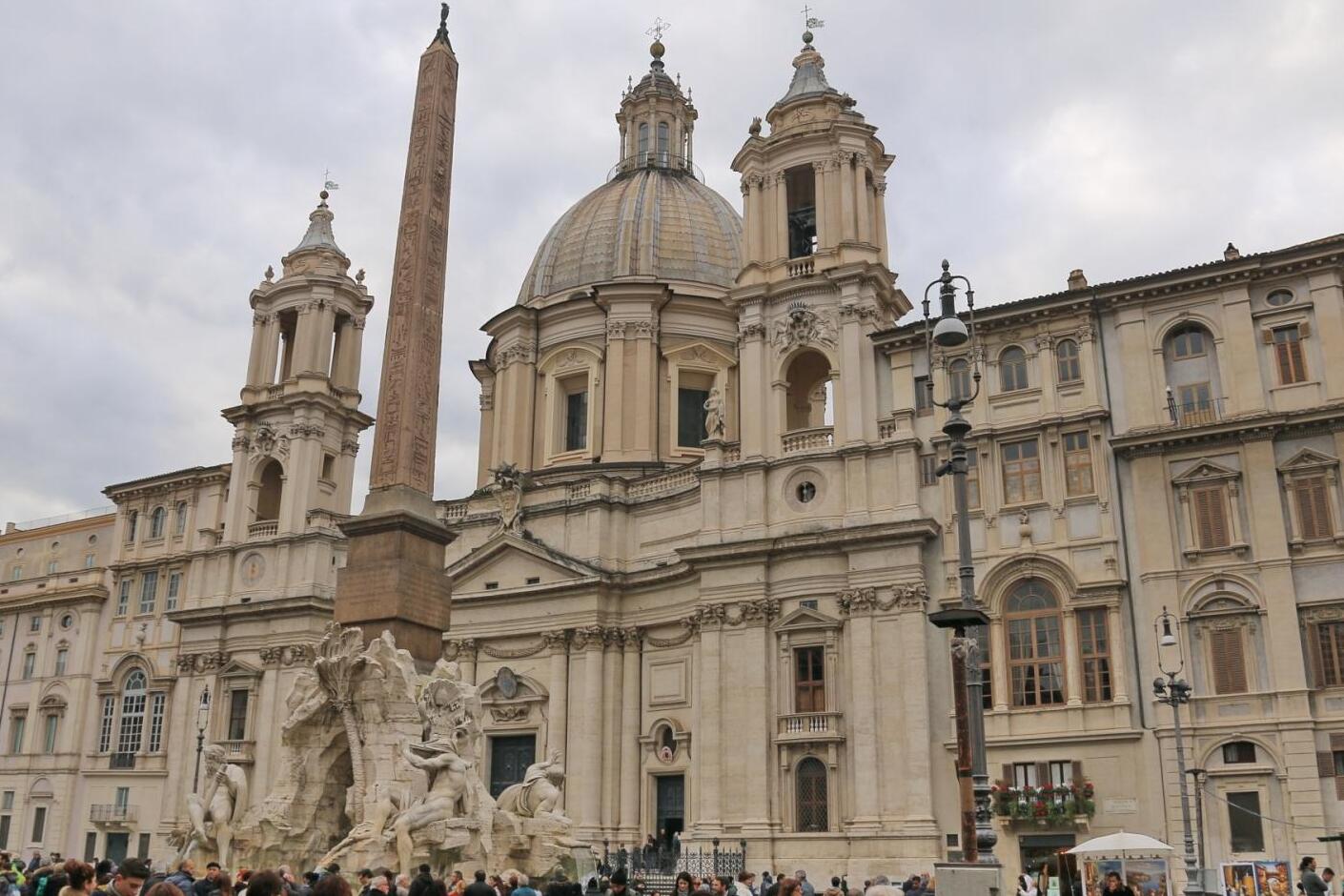

{ "title": "Church of Santa Agnese in Agone: A Baroque Jewel in Rome", "description": "Nestled in the heart of Piazza Navona, the Church of Santa Agnese in Agone stands as a striking testament to Rome's rich history and artistic heritage. This Baroque masterpiece, dedicated to St. Agnes, has origins that trace back to the 8th century, marking it as a significant site where the saint is believed to have endured her trials. According to tradition, this was the very spot where the young Agnes was subjected to public humiliation, only to have her hair miraculously grow to cover her modesty, showcasing a divine intervention that played a pivotal role in her story of martyrdom. The church we see today, with its stunning façade and intricate interiors, owes much to the vision of Pope Innocent X Pamphili, who commissioned architects Carlo Rainaldi and his son Girolamo Rainaldi to realize his dream in the 17th century. Completed in 1652, the church features a rich Baroque style, characterized by its dramatic curves and elaborate decorations, which align harmoniously with the lively atmosphere of the square that once served as the site of the ancient Circus of Domitian.\n\nAs you approach the church, the first thing that captures your attention is its magnificent façade, adorned with statues and intricate carvings. The interior is equally captivating, boasting a series of stunning frescoes that depict the life of St. Agnes. One of the notable artworks is 'The Martyrdom of St. Agnes' by Domenico Zampieri (also known as Domenichino), which beautifully encapsulates the saint's unwavering faith amid her trials. The chapel of St. Agnes houses a striking statue sculpted by Francesco Borromini, showcasing the saint in a pose that conveys both serenity and strength. This artistic richness not only highlights the skill of the artists involved but also the church's significance as a center of devotion and artistic expression.\n\nCulturally, the church and Piazza Navona are integral to the fabric of Roman life. The piazza itself is a hub of activity, lined with cafés and street performers, making it a vibrant gathering place for locals and tourists alike. Throughout the year, various festivals and events take place in the square, often linked to local saints or historical commemorations. The feast of St. Agnes, celebrated on January 21, draws crowds who gather to honor her legacy and partake in traditional rituals, including the blessing of lambs whose wool is used to create the pallium, a vestment worn by the Pope.\n\nWhen visiting Piazza Navona, indulging in local gastronomy is a must. The area is known for its delightful gelato shops, where you can savor rich flavors that reflect the city's culinary tradition. Additionally, many cafés serve caffè, a strong espresso that Romans enjoy throughout the day. Don’t miss sampling 'Maritozzo', a sweet bun filled with whipped cream, perfect for a snack as you explore the vibrant surroundings.\n\nFor those intrigued by lesser-known curiosities, the church holds a few surprises. The name **"
," which translates to "


