
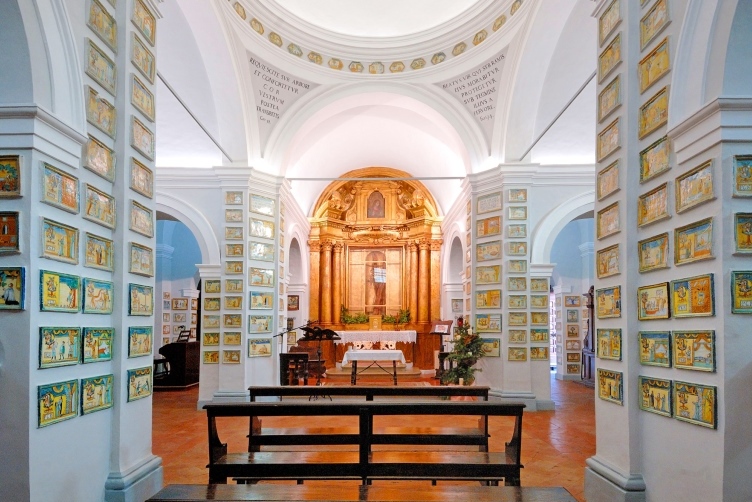

In the heart of Deruta, a charming village in the province of Perugia, lies a treasure that marries spirituality and art: the Sanctuary of the Madonna del Bagno. Upon entering this sacred space, visitors are greeted by walls adorned with approximately 700 hand-painted ceramic votive tiles, each telling a unique story. This sanctuary is not just an ecclesiastical building; it's a vibrant tapestry of local history, devotion, and artistic expression that has captivated thousands for over three centuries.
The origins of the Sanctuary of the Madonna del Bagno date back to the 17th century, specifically around 1620, when the first stones were laid to honor the Madonna della Quercia. The site is believed to have been a place of pilgrimage long before, as it was associated with miraculous healings and divine interventions. The church gained prominence after a miraculous event involving the image of the Madonna, which reportedly saved a local from an accident. This led to an influx of votive offerings, with locals presenting tiles that depicted their personal testimonies of divine favor.
Architecturally, the sanctuary showcases a blend of Baroque and Renaissance styles, reflecting the artistic movements of its time. The façade is simple yet elegant, with a central portal that invites visitors into its warm embrace. Inside, the walls are a feast for the eyes: the vibrant tiles, hand-painted by local artisans, form a mosaic of colors and stories. These tiles serve not only as artistic expressions but also as linguistic artifacts, inscribed with local dialects and phrases, revealing the rich tapestry of Umbrian culture. The artistic significance of these votive tiles cannot be overstated; they provide insights into the sociocultural dynamics of the region, showcasing the blending of faith, art, and community storytelling.
Local culture in Deruta is deeply intertwined with its artistic heritage. The village is renowned for its ceramic production, a craft that has been passed down through generations. The Deruta ceramics are celebrated not just for their beauty but also for their intricate designs, which often incorporate traditional motifs and patterns. Every year, the village hosts ceramics festivals that celebrate this rich heritage, inviting artisans from across Italy to showcase their work. The blend of spirituality and craftsmanship comes alive during these festivals, where the community gathers to honor both their patron saint and the art that defines them.
No visit to Deruta would be complete without indulging in its gastronomy. The region is known for its traditional Umbrian cuisine, which emphasizes local ingredients and time-honored recipes. Pasta alla Norcina, a rich dish made with sausage and cream, is a must-try, as is the Torta al Testo, a savory flatbread often filled with greens and cheese. Pair your meal with a glass of Sagrantino di Montefalco, a robust red wine that embodies the spirit of the region. The local markets and trattorias are perfect spots to savor these flavors, immersing yourself in the culinary traditions that have thrived alongside the sanctuary.
Among the many stories woven into the tapestry of the Sanctuary of the Madonna del Bagno, one lesser-known fact stands out: the local belief that the tiles possess protective qualities. Many locals attribute their miraculous recoveries or fortunate outcomes to the power of these votive offerings. Pilgrims often seek out specific tiles that resonate with their personal experiences, believing that by doing so, they can invoke blessings for themselves or loved ones. This tradition adds a layer of intimacy and connection to the sanctuary, making each visit a deeply personal journey.
For those looking to visit the Sanctuary of the Madonna del Bagno, the best time is during the spring and early autumn months, when the weather is mild and conducive for exploration. Plan your visit around local festivals for a truly immersive experience, where you can witness the community’s vibrant culture firsthand. Be sure to take the time to admire the details of the votive tiles; each one is a piece of history, representing the diverse stories and prayers of the people.
In conclusion, the Sanctuary of the Madonna del Bagno is more than just a church; it is a celebration of faith, art, and community. As you wander through its hallowed halls, allow yourself to be enveloped by the stories that echo within its walls. For a personalized journey through this enchanting destination and beyond, consider using the Secret World app to plan your itinerary.


