
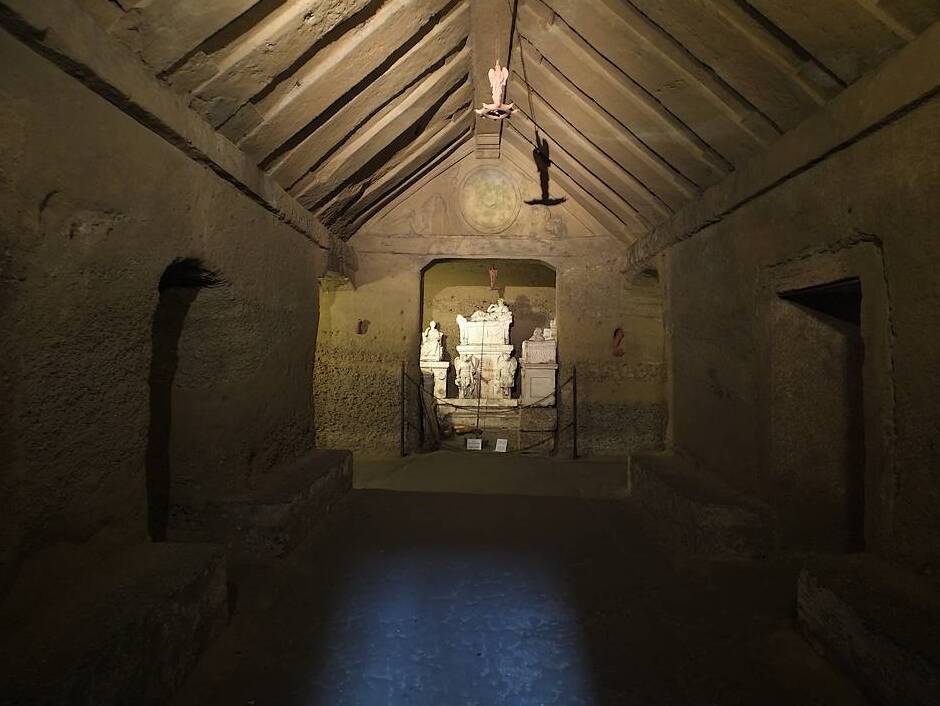

Nestled in the lush hills of Perugia, the Volumni Hypogeum is a remarkable testament to Etruscan civilization, revealing the intricate burial customs and architectural sophistication of a society that flourished long before the rise of Rome. Dating from the 3rd century B.C. to the 1st century A.D., this monumental tomb is part of the vast Etruscan necropolis of Palazzone, discovered in the 19th century and meticulously excavated since 1963. The necropolis features nearly 200 chamber tombs, showcasing a unique glimpse into the funerary practices of an ancient people who left an indelible mark on the Italian landscape.
At the entrance of the Volumni Hypogeum, visitors are greeted by a collection of intricate cinerary urns crafted from travertine, terracotta, marble, and sandstone. These urns are not merely decorative; they served the critical function of housing the ashes of the deceased, reflecting the Etruscans’ deep reverence for the afterlife. What sets the Volumni tomb apart is its architectural design, which mirrors the layout of a Roman-Italian house, complete with rooms arranged around a central atrium, a fascinating insight into the domestic life of this ancient civilization.
The dromos, or access corridor, to the burial chamber is steep and grandiose, leading visitors through an atmospheric passage that heightens the sense of entering a sacred space. As one descends, the artistry of the Etruscans becomes increasingly apparent. The walls are adorned with exquisite frescoes that vividly portray scenes from both everyday life and the afterlife, providing a rich narrative that transcends time. The tombs of Arunte and Lars Volumnio, for whom the hypogeum is named, are particularly notable for their elaborate decorations and the insight they offer into Etruscan beliefs and practices.
The cultural importance of the Volumni Hypogeum extends beyond its architectural grandeur. The Etruscans were known for their unique customs, such as the practice of holding elaborate funerary feasts to honor the dead. These traditions are echoed in local festivals today, such as the Perugia Jazz Festival, held annually in July, which, while contemporary, celebrates the region’s artistic spirit, a legacy that can be traced back to the ancient Etruscans.
Gastronomically, the region surrounding Perugia is rich with flavors that reflect its historical roots. Local specialties include torta al testo, a flatbread often filled with a variety of ingredients, and truffles, which are harvested from the nearby woods. Pair your meal with a glass of Sagrantino di Montefalco, a robust red wine that showcases the rich agricultural heritage of the region.
For those intrigued by lesser-known curiosities, the Volumni Hypogeum offers hidden details that many visitors overlook. For instance, the tomb features a unique architectural element known as the **


