
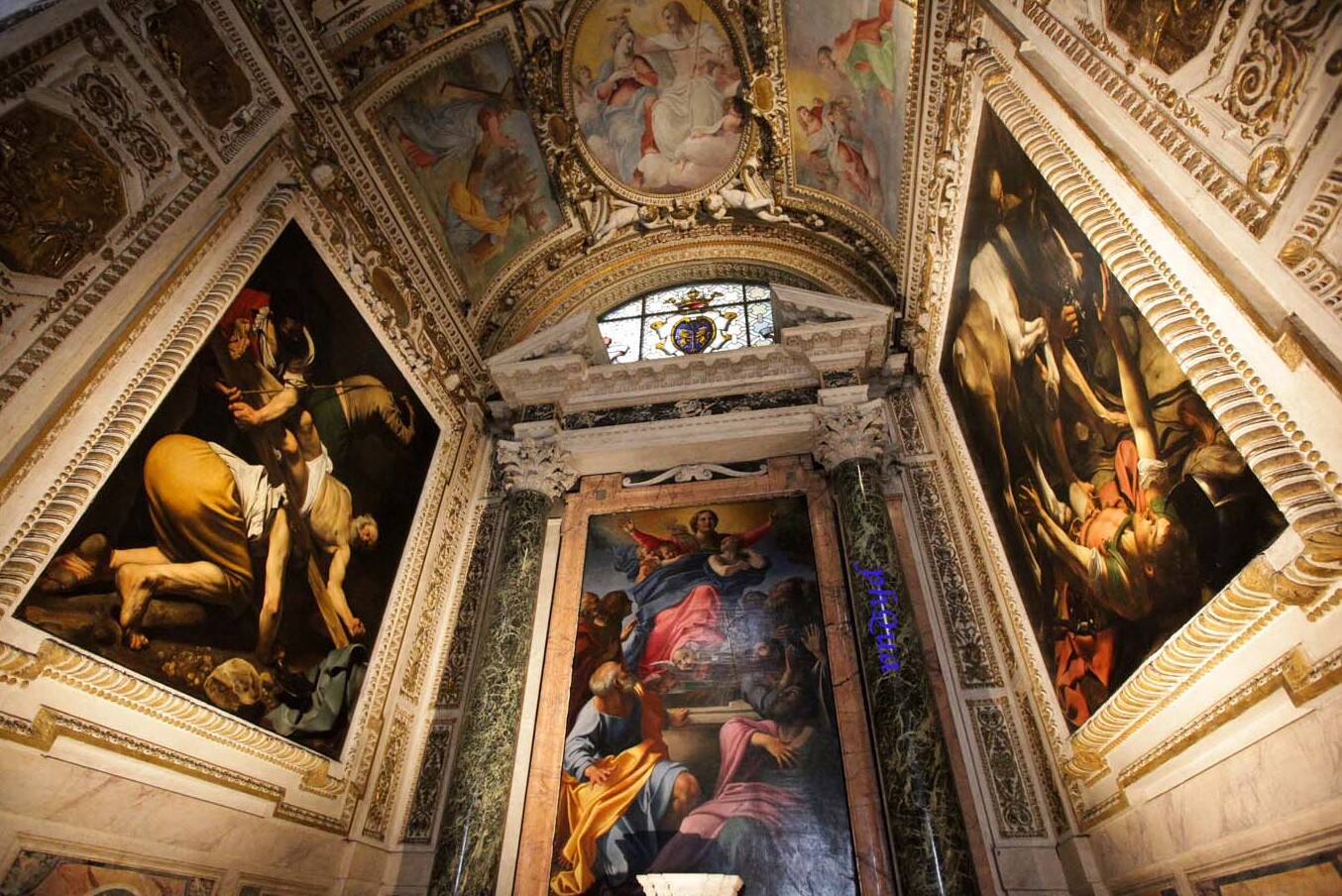

Nestled within the heart of Rome, the Cerasi Chapel stands as a testament to the intersection of faith and artistic genius. Beyond its modest exterior lies a world of profound artistic expression, primarily through the works of the legendary Michelangelo Merisi da Caravaggio. The chapel houses two of his most significant masterpieces: The Crucifixion of St. Peter and The Conversion of St. Paul.
The Cerasi Chapel, located within the Santa Maria del Popolo, was commissioned by Cardinal Tiberio Cerasi, the treasurer of Pope Clement VIII, in the late 16th century. The chapel was established around 1600, at a time when Rome was a vibrant center of art and religion, experiencing a cultural renaissance that would influence generations. It was during this period of fervent creativity that Caravaggio was invited to contribute to the chapel, marking a pivotal moment in his career.
Both works were completed between 1600 and 1601 and reflect Caravaggio's unique ability to blend dramatic realism with intense emotion. The Crucifixion of St. Peter captures the moment of martyrdom with startling immediacy. Unlike traditional depictions of saints in serene poses, Caravaggio presents a scene filled with struggle and raw emotion. Peter is depicted upside down, a reflection of his humble request to be crucified in this manner, symbolizing his unworthiness. The shadows enveloping the figures enhance the gravity of the moment, making the viewer feel the weight of the impending sacrifice.
In contrast, The Conversion of St. Paul offers a reinterpretation of a well-known biblical narrative. Here, Caravaggio famously shifts the focus from the saint to the horse, which dominates the canvas. The dramatic chiaroscuro technique highlights the tension between light and dark, reflecting the spiritual awakening of Saint Paul in a stable, a departure from the typical outdoor settings of such scenes. This choice not only emphasizes the raw humanity of the figures involved but also invites the audience into an intimate moment of divine intervention. Scholars have suggested that Caravaggio's use of real-life models adds to the authenticity of the emotions portrayed, making these works resonate on a deeply personal level.
Architecturally, the Cerasi Chapel is characterized by the restrained elegance of Mannerism, featuring a simple altar framed by ornate marble decorations. The chapel's design is a harmonious blend of Renaissance ideals and Baroque flourishes, creating a sacred space conducive to reflection and worship. The lighting, carefully orchestrated to enhance the dramatic effect of Caravaggio’s canvases, draws visitors into a contemplative experience that transcends mere observation.
Local culture and traditions surrounding the Santa Maria del Popolo are rich and varied. The church itself is a hub of activity, hosting numerous religious services and events throughout the year. One notable event is the feast of St. Paul, celebrated on June 29, which draws pilgrims and art enthusiasts alike to pay homage to the saint and reflect on his significance in Christian history. The church also plays a role in the local community, offering a space for cultural gatherings and activities that celebrate Rome’s profound artistic heritage.
When in Rome, gastronomy offers a delightful avenue for exploration. The area surrounding the Cerasi Chapel is filled with charming trattorias and cafes serving traditional Roman cuisine. Be sure to try Cacio e Pepe, a simple yet flavorful pasta dish made with pecorino cheese and black pepper, or Carciofi alla Romana, a Roman-style artichoke dish. Pair your meal with a glass of local Frascati wine, which complements the rich flavors of the region beautifully.
There are also lesser-known curiosities about the Cerasi Chapel that many visitors overlook. For instance, the chapel is home to a small but fascinating detail: the frescoes by Domenichino, which adorn the vault and are often overshadowed by Caravaggio’s masterpieces. Additionally, the chapel's location in Piazza del Popolo provides a stunning backdrop of ancient Rome, with its twin churches and the Obelisk of Ramses II standing sentinel over the vibrant square.
For those planning a visit, the best time to experience the Cerasi Chapel is during the early morning or late afternoon when the soft light enhances the dramatic quality of Caravaggio's works. To truly appreciate the emotional depth of these pieces, consider taking a guided tour that delves into the history and significance of each artwork. Don't forget to take a moment to absorb the atmosphere of the chapel, allowing the weight of history and artistry to envelop you.
The Cerasi Chapel is not merely a destination; it is a profound encounter with the artistic soul of Rome. For a fully personalized journey through this magnificent city, consider using the Secret World app to plan your itinerary.


