
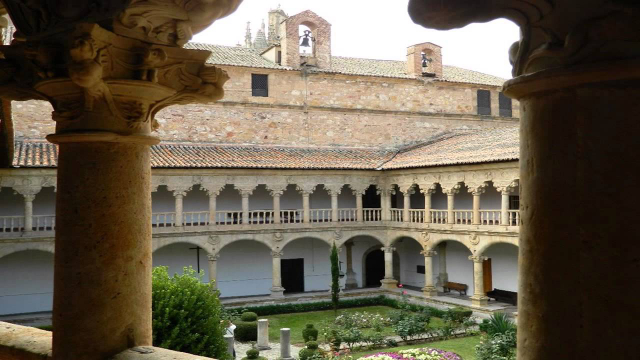

Nestled in the heart of Salamanca, the Convento de las Dueñas is a tapestry of history, art, and spirituality woven together over centuries. Founded in 1419 by Juana Rodríguez Maldonado, a widow who transformed her house into a spiritual haven, this convent has been a home to Dominican nuns for over 600 years. Its origins trace back to a time when the mingling of cultures in Spain birthed unique architectural marvels, and the convent stands as a testament to this rich historical tapestry.
The convent is an exquisite example of Mudejar architecture, a style that arose from the synthesis of Christian and Moorish influences. This architectural style is characterized by its intricate geometric patterns and the use of brick and plaster. The convent’s two-story Renaissance cloister is particularly breathtaking, featuring capitals adorned with fantastical beasts and human figures that evoke the vivid imagery of Dante’s Divine Comedy. These capitals are not mere decorations; they are storytelling in stone, offering insights into the artistic imagination of the Renaissance period.
Beyond its architectural beauty, the convent is steeped in local culture and tradition. Salamanca, a city known for its vibrant festivals and academic heritage, sees the convent play a role in various religious and cultural events throughout the year. During Semana Santa, or Holy Week, the city comes alive with processions, and the convent becomes a focal point for reflection and devotion. The nuns, known for their dedication and service, contribute to the spiritual fabric of this historic city.
No visit to Salamanca would be complete without indulging in its gastronomy, and the convent’s surroundings offer a delightful array of local flavors. Traditional dishes like hornazo, a savory pastry filled with pork, chorizo, and ham, and churros con chocolate are culinary highlights. Nearby markets and eateries serve these local delicacies, providing a taste of Salamanca’s rich culinary heritage.
For those who venture beyond the beaten path, the convent holds lesser-known curiosities that intrigue and surprise. Among these is the legend of a hidden underground passage that supposedly connects the convent to other parts of the city, a remnant of times when secrecy was as much a part of monastic life as prayer. Another fascinating detail is the soundscape within the convent—visitors often note the serene silence, punctuated only by the faint rustling of leaves in the cloister garden, creating a tranquil atmosphere for reflection.
For travelers planning a visit, the best time to explore the Convento de las Dueñas is during the spring and early autumn months when the weather is mild, and the city’s cultural calendar is bustling with events. It is advisable to allocate time to explore the cloister and its intricate carvings, which reveal new details with each visit. Photography enthusiasts will find the play of light and shadow in the cloister particularly captivating.
To craft a journey that captures the essence of Salamanca and the Convento de las Dueñas, consider using the Secret World app for a personalized AI itinerary.


