
← Back

The Temple of the Earth in Beijing

An Ding Men Wai Da Jie, An Ding Men, Dongcheng Qu, Beijing Shi, Cina ★★★★☆ 323 views
Karen Blixen
Dongcheng Qu
🏆 AI Trip Planner 2026

Get the free app

Discover the best of Dongcheng Qu with Secret World — the AI trip planner with 1M+ destinations. Get personalized itineraries, hidden gems and local tips. Free on iOS & Android.

🧠 AI Itineraries 🎒 Trip Toolkit 🎮 KnowWhere Game 🎧 Audio Guides 📹 Videos
Scan to download iOS / Android
Scan for AppGallery Huawei users

About The Temple of the Earth in Beijing

The Temple of the Earth in Beijing - Dongcheng Qu | Secret World Trip Planner

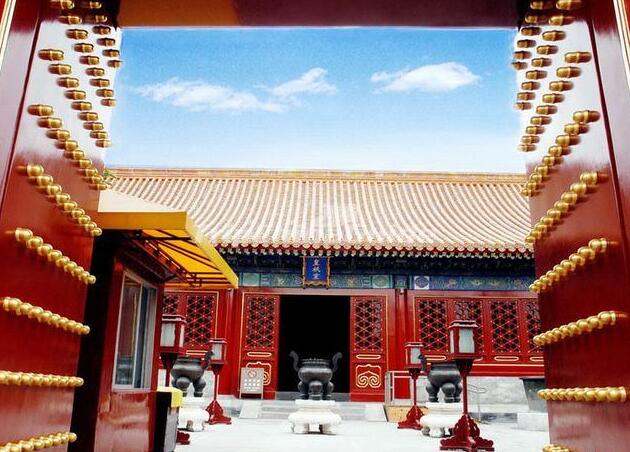
The Temple of the Earth (traditional Chinese: 地壇; simplified Chinese: 地坛; pinyin: Dìtán) in Beijing, At 42.7 hectares, it is the second largest of the four Temples of Beijing behind only the Temple of Heaven. The Temple of Earth (also referred to as the Ditan Park) was constructed in 1530 by the Jiajing Emperor during the Ming dynasty. For thousands of years, the Chinese have believed that important cosmic things could be symbolized using common shapes and directions. Because the Temple symbolizes the Earth, its footprint is square in shape. The square is a powerful symbol in Chinese culture and mythology which can mean Earth or the ground. The Temple's construction mirrors these beliefs with its many square walls and altars. The Temple of Earth is also located in the north of Beijing, north being the direction associated with the Earth. In contrast to this, the much larger Temple of Heaven is circular in shape, symbolizing the heavens and sky, and is located in the south of Beijing.These two temples, along with the Temple of the Moon and Temple of the Sun (located in the west and east, respectively), interact with each other in spiritually important ways. The Chinese government has listed the Earth temple as one of the most important historical monuments under special preservation.

🗺 AI Trip Planner

Plan your visit to Dongcheng Qu

Suggested itinerary near The Temple of the Earth in Beijing

MAJ+
500.000+ travelers worldwide
  1. 🌅
    Morning
    The Temple of the Earth in Beijing
    📍 Dongcheng Qu
  2. ☀️
    Afternoon
    Beijing | Drum Tower
    📍 2.2 km · Dongcheng Qu
  3. 🌆
    Evening
    why not take a boat tour on Lake Shichahai?
    📍 3.3 km · Dongcheng Qu

Buy Unique Travel Experiences

Powered by Viator

See more on Viator.com

Explore nearby · Dongcheng Qu

Frequently Asked Questions

The square shape is intentional and deeply rooted in Chinese cosmology—the square symbolizes the Earth and ground in Chinese culture and mythology. This architectural choice mirrors ancient beliefs that important cosmic forces could be represented through specific shapes and directions, with the temple's many square walls and altars reinforcing this symbolic connection to the Earth.
The Temple of the Earth was constructed in 1530 by the Jiajing Emperor during the Ming dynasty. It stands as one of Beijing's most important historical monuments and has been designated by the Chinese government for special preservation due to its historical and cultural significance.
The Temple of the Earth is the second largest of Beijing's four temples at 42.7 hectares, surpassed only by the larger Temple of Heaven. While the Temple of the Earth is square-shaped and located in the north (representing Earth), the Temple of Heaven is circular and situated in the south, symbolizing the heavens and sky.
Beijing's four sacred temples are spiritually interconnected: the Temple of the Earth in the north, the Temple of Heaven in the south, the Temple of the Moon in the west, and the Temple of the Sun in the east. Together, they represent important cosmic forces and cardinal directions in Chinese spiritual tradition.
Yes, the Temple of the Earth, also known as Ditan Park, welcomes visitors and features numerous square walls and altars that showcase the temple's symbolic architecture. As a specially preserved historical monument, the site offers insight into Ming dynasty construction and ancient Chinese cosmological beliefs reflected in its layout and design.
