
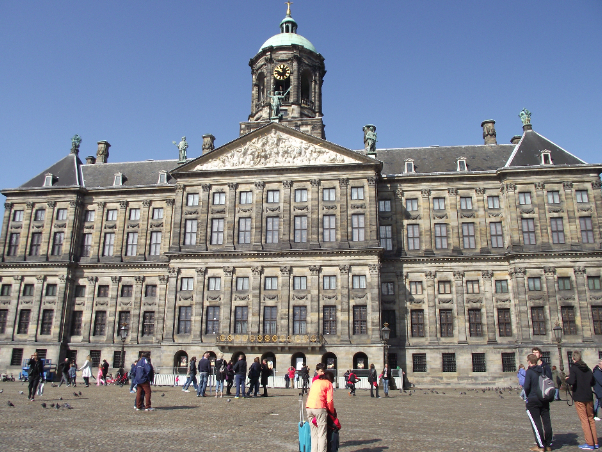

In the heart of Amsterdam, nestled between the imposing Royal Palace and the historic Nieuwe Kerk, lies a vibrant crossroad of history, culture, and daily life. This bustling square, known as Dam Square, is not just the city's main junction; it is a dynamic tapestry woven from the threads of Amsterdam’s rich past and lively present. Here, the echoes of history resonate with the lively chatter of street performers and the curious hum of visitors.
The history of Dam Square is as old as Amsterdam itself. The area was the site of a dam built on the Amstel River in the 13th century, which is how the city got its name. Over the centuries, it has been the stage for pivotal historical events, from royal parades to revolutionary protests. The Royal Palace itself, originally constructed as the Town Hall in the mid-17th century, stands as a testament to the Dutch Golden Age, symbolizing the prosperity and influence of Amsterdam as a global trade hub.
Architecturally, the Royal Palace exudes grandeur with its classical style, inspired by the ancient Roman Empire. Its exterior is adorned with intricate sculptures by Artus Quellinus that celebrate Amsterdam's maritime prowess. Meanwhile, the Nieuwe Kerk, dating back to the 15th century, is a stunning example of Gothic architecture. Despite its name, which means "New Church," it is one of the oldest buildings in the city. Today, it serves as an exhibition space and hosts royal ceremonies, including the investitures of Dutch monarchs.
Culturally, Dam Square is a microcosm of Dutch life. The square is a gathering place for locals and tourists, hosting a myriad of street performers whose acts range from musical performances to gravity-defying acrobatics. It is a place where the city’s past and present collide, particularly during events like King’s Day, when the square becomes a sea of orange as people celebrate the Dutch royal family with music, dancing, and traditional games.
Gastronomy around Dam Square offers a taste of Amsterdam’s culinary diversity. While the area is dotted with international eateries, local flavors can be savored in dishes like haring (raw herring), typically served with onions and pickles, or stroopwafels, a sweet treat made from thin waffle cookies filled with caramel syrup. For a more substantial meal, one might try stamppot, a hearty dish of mashed potatoes mixed with vegetables, often served with sausage.
Beyond the obvious attractions, Dam Square holds lesser-known curiosities. Few visitors notice the tiny sculpture of a hand holding a heart, embedded discreetly in the wall of the Nieuwe Kerk, symbolizing the city's open-hearted nature. Nearby, the National Monument, a towering white pillar, stands solemnly in memory of the victims of World War II, a poignant reminder of the city’s resilience.
For those planning a visit, the best time to experience Dam Square is during the spring or early autumn. These seasons offer pleasant weather, ideal for exploring the city's open spaces. Early morning visits provide a quieter experience, with the square bathed in the soft glow of the rising sun. As the day progresses, the atmosphere becomes more animated, perfect for those who thrive on the energy of crowds.
When visiting, take the time to observe the details: the ornate facades of the surrounding buildings, the vibrant displays of street artists, and the diverse crowd that esteems Dam Square as an emblem of Amsterdam’s identity. For an insider tip, stop by the Bijenkorf department store's rooftop for a panoramic view that captures the essence of the square, offering a perspective that is both expansive and intimate.
In the end, Dam Square is more than a mere geographical location; it is a living, breathing entity that encapsulates the spirit of Amsterdam. Whether you are there to delve into history, savor local flavors, or simply soak in the vibrant atmosphere, this iconic square promises a memorable experience at the crossroads of past and present.


