
← Back

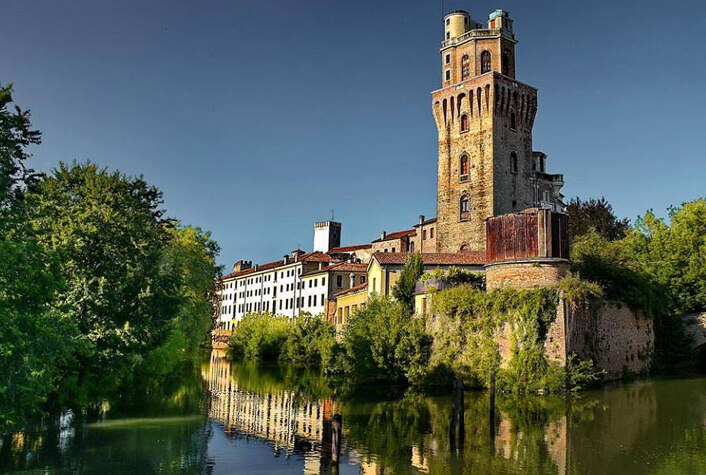
La Specola, one of the symbols of Padua

Vicolo dell'Osservatorio, 5, 35122 Padova PD, Italia ★★★★☆ 369 views
Simona Illy
Padova
🏆 AI Trip Planner 2026

Get the free app

Discover the best of Padova with Secret World — the AI trip planner with 1M+ destinations. Get personalized itineraries, hidden gems and local tips. Free on iOS & Android.

🧠 AI Itineraries 🎒 Trip Toolkit 🎮 KnowWhere Game 🎧 Audio Guides 📹 Videos
Download on the App Store Get it on Google Play
Scan to download Scan to download

About La Specola, one of the symbols of Padua

La Specola, one of the symbols of Padua - Padova | Secret World Trip Planner

The Specola is one of the most representative symbols of the city and its history: the high tower is in fact a reminder of the tyranny of Ezzelino III da Romano, who in 1242 had built a castle with two towers, the largest of which, as the chronicles of the time tell us, was the place where the tyrant kept his prisoners locked up and tortured them. The Specola The subsequent lords of Padua, the Carrara family, built a new castle-fortification in 1374 on the remains of the old one as a defensive bulwark and a splendid building decorated inside and out. On 21 May 1761 the Senate of the Republic of Venice issued a decree establishing an astronomical observatory at the University of Padua, to be used also as a training place for future astronomers. Only four years later, in September 1765, the professor of astronomy, geography, and meteors, Abbot Giuseppe Toaldo (1719-1797), was assigned the task of visiting the main Italian observatories to learn about the structure of the building and the main instruments necessary for the astronomer's activity. On his return from this investigation, Toaldo, after presenting the project, in December of the same year brought from Vicenza the architect Don Domenico Cerato (1715-1792), a friend and fellow student at the Episcopal Seminary of Padua and one of the most skilled architects of the time. Toaldo proposed to use the High Tower of Castel Vecchio for its large and solid walls and for its location inside the city, ideal for astronomical observation. In particular, the Tower was suitable because it allowed an excellent observation towards the south, that is towards the celestial meridian, a crucial point for the study of the motion of the stars. And so it was that, after ten years of work, in 1777 the Tower became an astronomical observatory, or "specula astronomica" according to the Latin wording. Cannocchiale della Specola - ph Danesin The interior of the tower was restructured for the use of astronomical observations and was divided into two parts: a lower part, 16 meters above the ground on the east wall, where the Meridian Room was built for observations at the celestial meridian, and an upper part, 35 meters above the ground in the area of the battlements, where a high room with high windows was built, the Hall of Figures, to observe the vault of heaven from every angle with telescopes of various types, also using the adjacent terrace. The new observatory, one of the most beautiful in 18th century Europe, was visited by illustrious figures, such as the German poet and playwright Johann Wolfgang Goethe, who in 1786 described in his travel diary the splendid panorama he could admire from the top of the Observatory tower.

🗺 AI Trip Planner

Plan your visit to Padova

Suggested itinerary near La Specola, one of the symbols of Padua

MAJ+
500.000+ travelers worldwide
  1. 🌅
    Morning
    La Specola, one of the symbols of Padua
    📍 Padova
  2. ☀️
    Afternoon
    The Bishops' Hall of Padua
    📍 0.6 km · Padova
  3. 🌆
    Evening
    Precinema Museum - Minici Zotti Collection
    📍 0.6 km · Padova

Buy Unique Travel Experiences

Powered by Viator

See more on Viator.com

Explore nearby · Padova

Frequently Asked Questions

La Specola has a dramatic history spanning centuries: it was originally built in 1242 as part of a castle by the tyrant Ezzelino III da Romano, who used the tower to imprison and torture victims. The Carrara family later reconstructed it in 1374 as a defensive fortification, and finally in 1777 it was transformed into an astronomical observatory by professor Giuseppe Toaldo, making it one of Padua's most significant historical landmarks.
Professor Giuseppe Toaldo selected the tower specifically for its large, solid walls and strategic location within the city, which provided ideal conditions for astronomical observation. Most importantly, the tower's position allowed excellent viewing toward the south and the celestial meridian, which was crucial for studying the motion of stars and conducting accurate astronomical research.
After the Venetian Senate issued a decree in 1761 establishing an astronomical observatory at the University of Padua, it took a decade of renovation work before the tower officially became the 'specula astronomica' in 1777. Architect Domenico Cerato and professor Giuseppe Toaldo led the transformation, restructuring the interior specifically for astronomical observations.
Giuseppe Toaldo (1719-1797) was a professor of astronomy, geography, and meteors who conceived the idea of converting the High Tower into an astronomical observatory. He traveled to major Italian observatories to study their design, proposed the tower as an ideal location for the observatory, and oversaw the restructuring project that transformed it into one of Italy's important astronomical centers.
Visitors to La Specola can explore a tower that represents centuries of Paduan history, from its medieval origins as a fortress tower to its transformation into an astronomical observatory. The interior has been restructured to accommodate astronomical instruments and observations, making it a fascinating destination for those interested in both the city's historical architecture and the history of Italian science and astronomy.
