
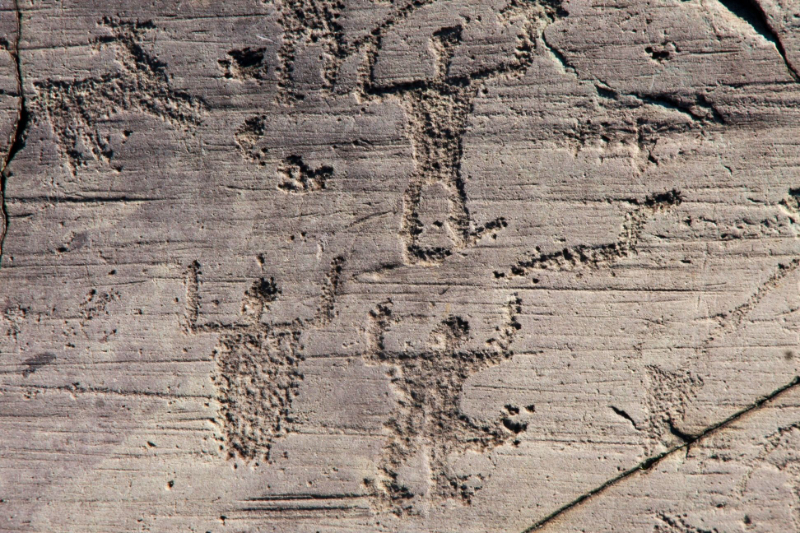

The Camonica Valley, in the Alpine area of northern Italy, has one of the largest collections of rock engravings in the world. The rock art of the Camonica Valley, attested on about 2,000 rocks, in more than 180 localities included in 24 different municipalities, represents the first recognized UNESCO World Heritage Site in Italy, in 1979, for an initial recognized nucleus of more than 140,000 figures, to which new discoveries were added uninterruptedly over time, until reaching a current estimate of more than 200,000. A veritable gallery of prehistoric art, to be visited on an itinerant, naturalistic journey through the beauty of the Valley. More than 140,000 symbols and figures carved into the rock over a period of about 8,000 years describe themes related to agriculture, navigation, warfare, hunting, and magic, but also represent symbolic geometric figures.
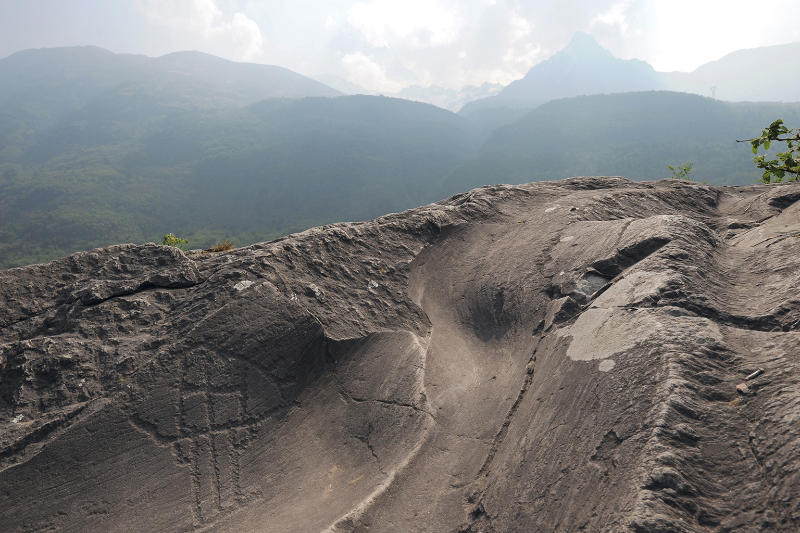
The earliest traces of man in Valle Camonica date back at least thirteen thousand years, when the area was first affected by human habitation following the melting of glaciers, but it was not until the advent of the Neolithic (5th-4th millennia B.C.) that the first inhabitants settled permanently in the valley. Some anthropomorphic figures (the so-called "orants," schematic human beings with arms pointing upward) and certain "topographic depictions" are traditionally traced to this phase.
During the Eneolithic (3rd millennium B.C.), with the development of early metallurgy, the discovery of plowing and wheeled transportation, a number of shrines composed of engraved boulder-menhirs became widespread in the Camonica Valley. The height of engraving art in the valley was reached with the Iron Age (1st millennium B.C.), a period to which about 75 percent of the engravings date.
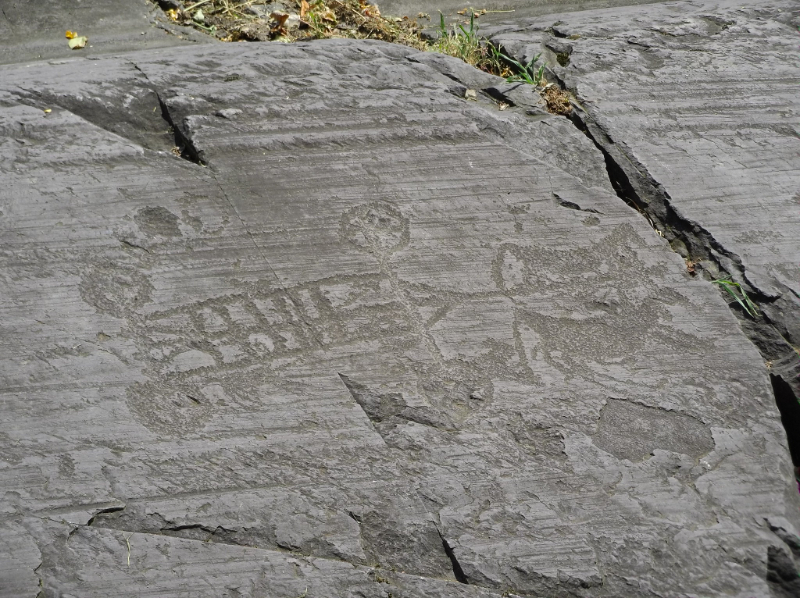
Engraving art in the Camonica Valley began to decline with the subjugation to the Roman Empire (16 B.C.), except for a brief revival in the late medieval period.
Eight archaeological parks and a national museum of prehistory have been established to enhance the rock archaeology complex.


