
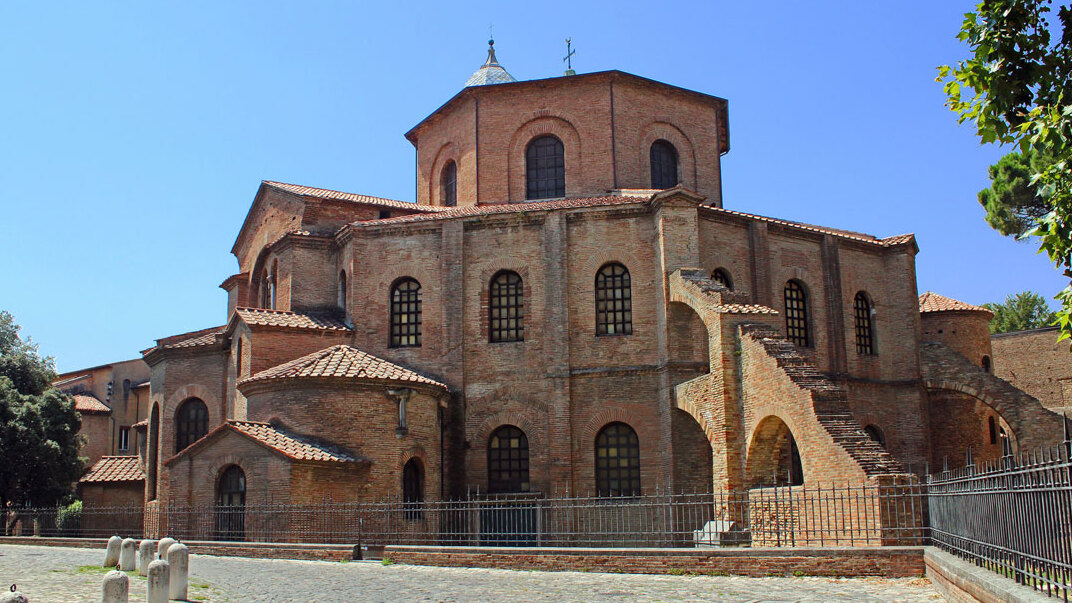

In the heart of Ravenna, Italy, the Basilica of San Vitale rises majestically, a testament to the city’s rich tapestry of history and art. This architectural gem, a UNESCO World Heritage Site since 1996, stands as a bridge between the ancient and the divine, captivating visitors with its intricate mosaics and unique structure.
The origins of the Basilica date back to 525 AD, commissioned by Bishop Ecclesio. It was designed during a transformative era for Christianity, reflecting the fusion of both Western and Eastern traditions. Completed in 547 AD under the aegis of Archbishop Massimiano, the Basilica embodies the transition between the Roman Empire and the Byzantine era. Its construction involved not just local artisans but also skilled workers from distant lands, showcasing the cosmopolitan nature of Ravenna at the time.
Architecturally, San Vitale is a marvel of early Christian design. The octagonal plan, crowned by a beautifully frescoed dome, creates an atmosphere of upward aspiration. The interplay of light filtering through the numerous windows casts ethereal patterns, enhancing the spiritual ambiance. As you step inside, the soaring arches and intricate mosaics draw your gaze upward, creating a sense of divine elevation. The walls are adorned with stunning depictions of biblical scenes, each tile meticulously placed to form a cohesive narrative of faith and redemption.
Among the most notable mosaics are the vibrant representations of Emperor Justinian and Empress Theodora, flanked by their respective entourages. These mosaics not only serve a decorative purpose but also assert the political and religious authority of the Byzantine rulers. The level of detail and the use of gold tesserae create a shimmering effect, capturing the light and highlighting the importance of these figures in the early Christian world.
Local culture in Ravenna is equally rich and vibrant, deeply intertwined with its historical roots. Festivals such as the Ravenna Festival, held annually in June and July, celebrate the city’s artistic heritage with music, theater, and dance performances often held in historical venues like San Vitale itself. The Basilica’s role as a cultural hub extends beyond its architectural significance, as it continues to be a venue for various religious ceremonies and events that showcase the community's dedication to preserving its traditions.
No exploration of Ravenna is complete without indulging in its culinary delights. The region is celebrated for its cappelletti, small pasta stuffed with meat, often served in a savory broth. Pair this with a glass of Sangiovese, a robust red wine native to the Emilia-Romagna region, and you have a meal that is as rich in flavor as Ravenna is in history. The local pasticceria offers delectable sweets like bignè, cream-filled pastries that are perfect for an afternoon treat, especially when enjoyed with a strong Italian espresso.
While many visitors flock to the Basilica for its famous mosaics, there are lesser-known curiosities that add layers to its story. For instance, beneath the Basilica lies a labyrinth depicted in the floor of the presbytery, symbolizing the complex journey of the soul towards purification. This intricate design invites contemplation and serves as a reminder of the spiritual significance of the space. Additionally, the Basilica’s unique octagonal shape was inspired by the Hagia Sophia in Constantinople, highlighting the architectural exchanges between the East and West.
For those planning a visit, the Basilica of San Vitale is best experienced in the early morning or late afternoon when the light casts a warm glow on its mosaics. Allocate at least an hour to absorb the intricate details and the serene atmosphere. Don’t forget to look up; the dome is a marvel in itself, adorned with a radiant depiction of Christ surrounded by the evangelists. Audio guides are available and can enrich your visit with historical context and artistic insights.
As you wander through the Basilica and its surroundings, the allure of Ravenna unfolds in every corner, from the ancient streets lined with charming cafes to the echoes of history that linger in the air. Whether you’re an art enthusiast, a history buff, or simply a curious traveler, the Basilica of San Vitale promises a profound experience that resonates long after your visit.
To truly tailor your journey through this enchanting city, consider using the Secret World app to plan a personalized AI itinerary that uncovers the hidden gems of Ravenna.


