
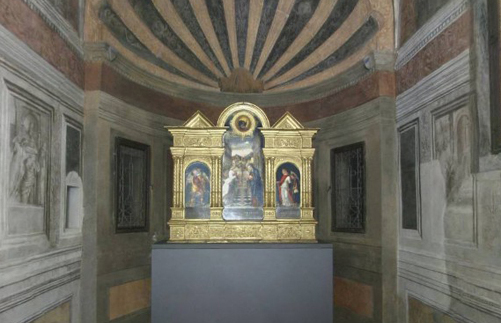

Nestled within the elegant halls of the Bishop's Palace in Padua, the Chapel of Santa Maria degli Angeli is a hidden gem that encapsulates the rich tapestry of the city’s Renaissance heritage. Built in 1495 under the auspices of Bishop Pietro Barozzi, this chapel is not merely a place of worship but a vibrant testament to the artistic fervor that defined the era.
The origins of this chapel are deeply intertwined with the evolution of the Diocesan Museum, which occupies the same space. This museum, established to preserve the religious and artistic history of the region, showcases the chapel as a pivotal point in the narrative of Padua’s ecclesiastical architecture. Designed by Lorenzo da Bologna, one of the most prominent architects of the time, the chapel is a striking example of Renaissance design, marked by its harmonious proportions and serene ambiance. The architectural style gracefully merges functionality with aesthetic beauty, inviting visitors to reflect in its tranquil surroundings.
As you enter the chapel, your gaze is immediately drawn to the stunning frescoes that adorn its walls, crafted by the talented artists Prospero da Piazzola and Jacopo da Montagnana. These works were conceived under a strict iconographic programme centered around the Apostles' Creed, a reflection of Bishop Barozzi's theological vision. Each fresco narrates a chapter of salvation history, illustrating the essence of Christ's redemption and the apostolic foundation of the Church.
The chapel's centerpiece is the magnificent triptych painted by Jacopo da Montagnana, prominently displayed in the apse. This exquisite artwork depicts the Annunciation, flanked by the archangels Michael and Raphael, capturing the moment of divine revelation with remarkable clarity and emotion. The interplay of light and shadow in the frescoes enhances their spiritual intensity, making the chapel a serene spot for contemplation.
Beyond its artistic offerings, the Chapel of Santa Maria degli Angeli is steeped in local culture and traditions. Padua is known for its vibrant festivals, which often celebrate its rich religious heritage. The Feast of Saint Anthony, held every June, draws thousands of pilgrims to the Basilica of Saint Anthony, just a short stroll from the chapel. This event reflects the deep-rooted devotion of the Paduans and their connection to the divine, echoing the themes found within the chapel's artwork.
Culinary traditions in Padua are equally compelling, with local gastronomy reflecting the region's agricultural bounty. A visit to the chapel would not be complete without indulging in bigoli—a type of thick spaghetti served with a rich duck ragù—and soprèssa, a cured meat that is a staple in local cuisine. Pair your meal with a glass of Prosecco, a sparkling wine that originates from the nearby hills, and you’ll experience the flavors that define this historic city.
For those curious about lesser-known facets of the chapel, consider exploring the intricate details of the frescoes. Each figure is imbued with symbolism, offering layers of meaning for those who take a moment to observe closely. Additionally, the chapel's intimate size allows for a personal encounter with its artistic treasures, often missed by larger crowds flocking to more famous sites.
To visit the Chapel of Santa Maria degli Angeli, the best time is during the late spring or early fall when the weather is pleasantly mild, and the tourist crowds are thinner. The chapel is typically open to visitors throughout the week, but checking the local schedule is advisable to avoid any closures. Don’t miss the opportunity to examine the frescoes up close; the details and colors are most striking in natural light.
In conclusion, the Chapel of Santa Maria degli Angeli is a microcosm of Padua’s rich historical and cultural landscape. Its exquisite art, serene architecture, and spiritual significance make it a must-visit for anyone wishing to dive deep into the heart of this remarkable city. For a personalized journey through Padua’s treasures, consider using the Secret World app to craft your ideal itinerary.


