
← Back

The Mercury Fountain

Parc de Montjuïc, s/n, Sants-Montjuïc, 08038 Barcelona, Spagna ★★★★☆ 258 views
Marianna Totti
Barcelona
🏆 AI Trip Planner 2026

Get the free app

Discover the best of Barcelona with Secret World — the AI trip planner with 1M+ destinations. Get personalized itineraries, hidden gems and local tips. Free on iOS & Android.

🧠 AI Itineraries 🎒 Trip Toolkit 🎮 KnowWhere Game 🎧 Audio Guides 📹 Videos
Scan to download iOS / Android
Scan for AppGallery Huawei users

About The Mercury Fountain

The Mercury Fountain - Barcelona | Secret World Trip Planner

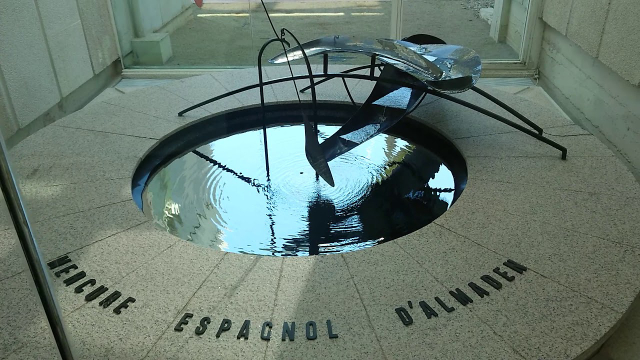
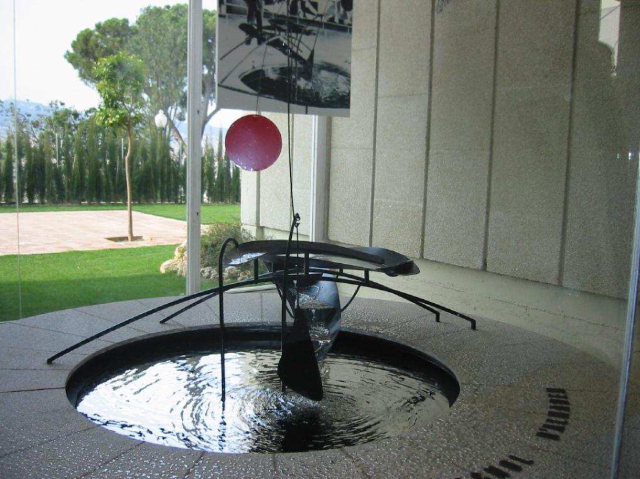
The Mercury Fountain, created by American sculptor Alexander Calder, is a significant piece of art with deep historical and political roots. Its inception for the 1937 World’s Fair in Paris, designed to run not with water but with pure mercury, symbolizes a poignant chapter in history tied to the Spanish Civil War and the tragic legacy of mercury mining in Almadén, Spain. Calder's work, positioned in the context of conflict and suffering, alongside Picasso’s Guernica, captures the era's turmoil and the human cost associated with the Almadén mines.
The Mercury Fountain - Barcelona | Secret World Trip Planner

The fountain's relocation to the Fundacio Joan Miro in Barcelona safeguards its legacy and ensures its continued appreciation. The decision to display the fountain behind glass is a necessary concession to public health, acknowledging the beautiful yet hazardous nature of mercury. This installation not only preserves the artistic and historical significance of Calder's work but also serves as a reminder of the complex interplay between industrial progress, human labor, and environmental health.

Visitors to the Fundacio Joan Miro can witness this unique piece of art, which requires an entry fee. The journey to the museum itself, via the funicular up Montjüic Hill, adds to the experience, situating the Mercury Fountain within Barcelona's rich cultural and historical landscape. This piece stands as a testament to the enduring power of art to reflect and critique societal issues, encapsulating a moment in time where beauty and toxicity converge.

 
🗺 AI Trip Planner

Plan your visit to Barcelona

Suggested itinerary near The Mercury Fountain

MAJ+
500.000+ travelers worldwide
  1. 🌅
    Morning
    The Mercury Fountain
    📍 Barcelona
  2. ☀️
    Afternoon
    The Teatre Grec is an open-air amphitheater,on the mountain of Montjuïc
    📍 0.1 km · Barcelona
  3. 🌆
    Evening
    Palau Nacional | National Art Museum of Catalonia (MNAC)
    📍 0.5 km · Barcelona

Buy Unique Travel Experiences

Powered by Viator

See more on Viator.com

Explore nearby · Barcelona

Frequently Asked Questions

The Mercury Fountain was created by renowned American sculptor Alexander Calder for the 1937 World's Fair in Paris. The fountain was designed to run with pure mercury rather than water and symbolized the suffering caused by the Spanish Civil War and the tragic legacy of mercury mining in Almadén, Spain.
The Mercury Fountain is currently housed at the Fundacio Joan Miro in Barcelona, Spain, where it is permanently displayed to safeguard its artistic and historical legacy. The fountain is exhibited behind protective glass due to the hazardous nature of mercury.
The fountain is protected behind glass as a necessary public health measure, acknowledging the beautiful yet dangerous properties of mercury. This precaution ensures visitor safety while preserving the integrity of Calder's historically significant artwork.
The Mercury Fountain holds deep political and historical importance, created during the Spanish Civil War era and positioned alongside Picasso's Guernica at the 1937 Paris World's Fair. It serves as a poignant reminder of the human cost and industrial suffering associated with mercury mining in Almadén and the era's overall turmoil.
When visiting the Fundacio Joan Miro in Barcelona, expect to view the fountain behind protective glass encasing to ensure public safety from mercury exposure. The installation combines artistic appreciation with an educational perspective on industrial history and the Spanish Civil War's impact.
