
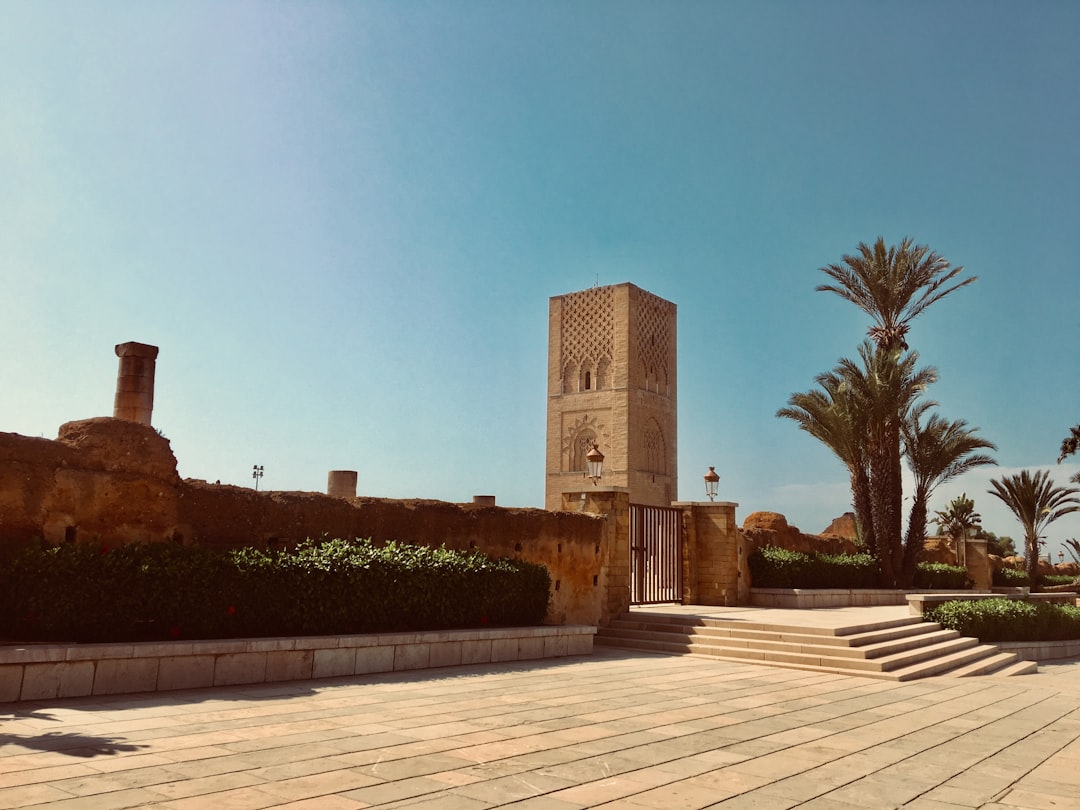

Hundreds of white storks soar over the medieval towers while wild figs slowly break through the sandstone walls. Chellah, just a few minutes from the center of Rabat, is a place where four civilizations have overlapped over the course of two thousand years, leaving each a visible and tangible trace for those who know where to look.
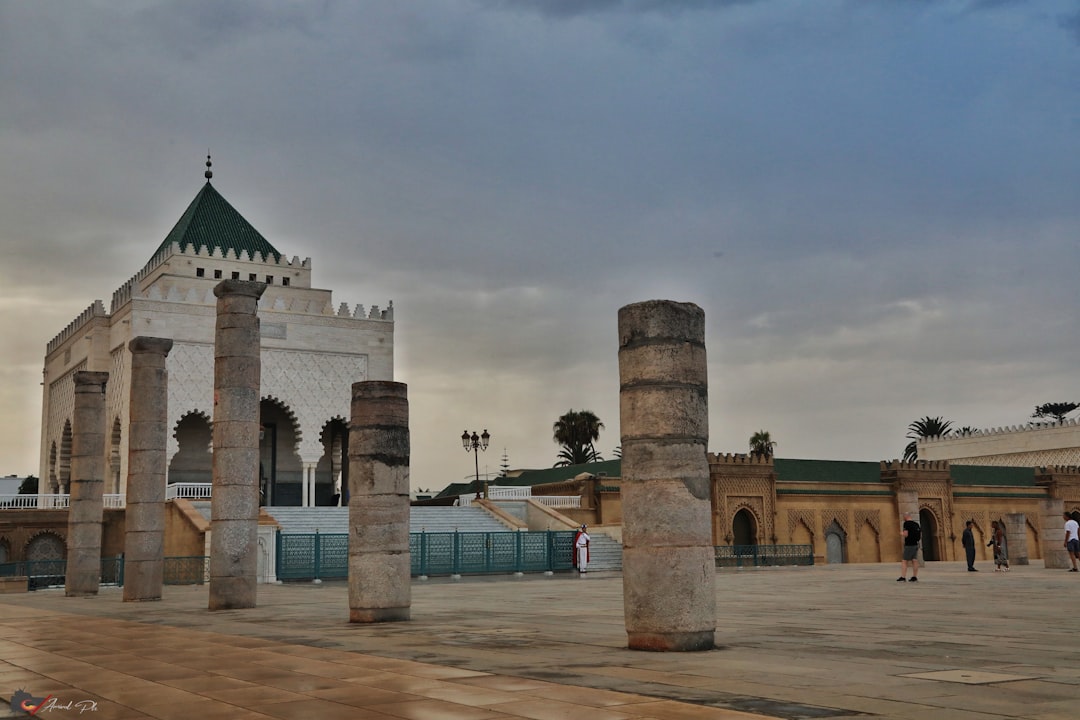
The site occupies a hill that slopes down towards the Bou Regreg river, protected by a wall built by the Marinids in the 14th century. Entering through the main portal — a monumental door decorated with stucco arabesques and Quranic inscriptions — means physically crossing the boundary between the modern city and a landscape that belongs to a much more distant time.
The Phoenician and Roman Origins of the Site
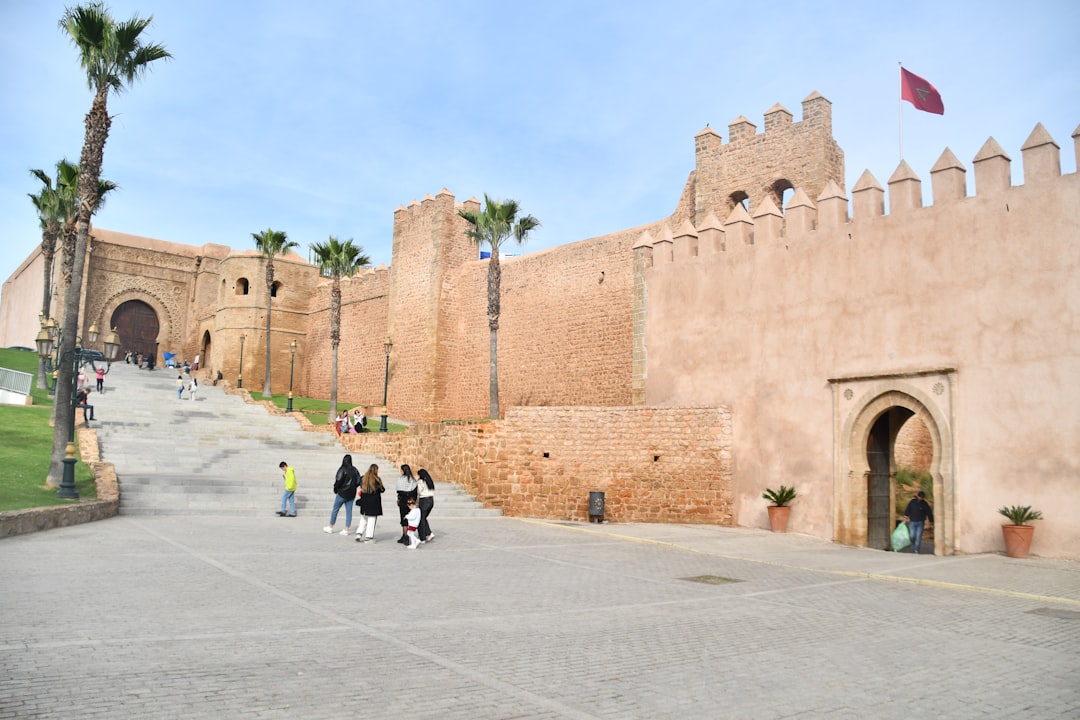
Before the Marinids chose this place as a dynastic necropolis, Chellah was Sala Colonia, a Roman city founded in the 1st century AD on a pre-existing Phoenician settlement. The ruins of the Roman urban layout are still legible: the course of the decumanus, the remains of the forum, the foundations of a temple, and the broken columns that dot the lawn are clearly distinguishable. A Roman milestone preserved in situ still bears a Latin inscription, one of the most surprising details that can be observed by approaching carefully.
The Roman city was abandoned around the 3rd-4th century AD, and for centuries the site remained in a state of neglect before the Marinid sultans recognized its symbolic and strategic value. The choice to build their necropolis here was not random: to dominate an ancient place meant to legitimize their power through continuity with the past.
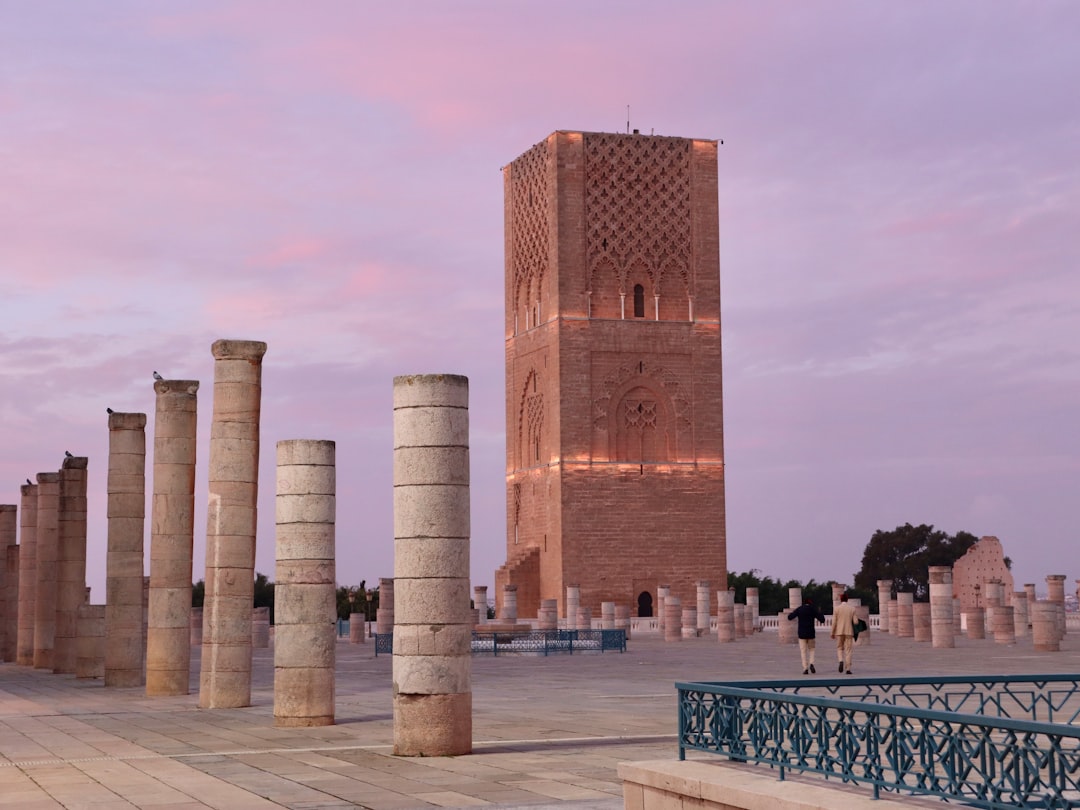
The Marinid necropolis: funerary architecture of the 14th century
The heart of the site is the necropolis commissioned by the Marinid sultans, particularly by Abu al-Hassan, who in 1339 had a mosque, a zawiya — a sort of religious complex with educational and hospitable functions — and the tombs of the royal family built. What remains of these buildings is fragmentary but extraordinarily evocative: minarets with zellij decorations still partially intact, horseshoe arches framing the sky and vegetation, stone basins where water flowed for ritual ablutions.
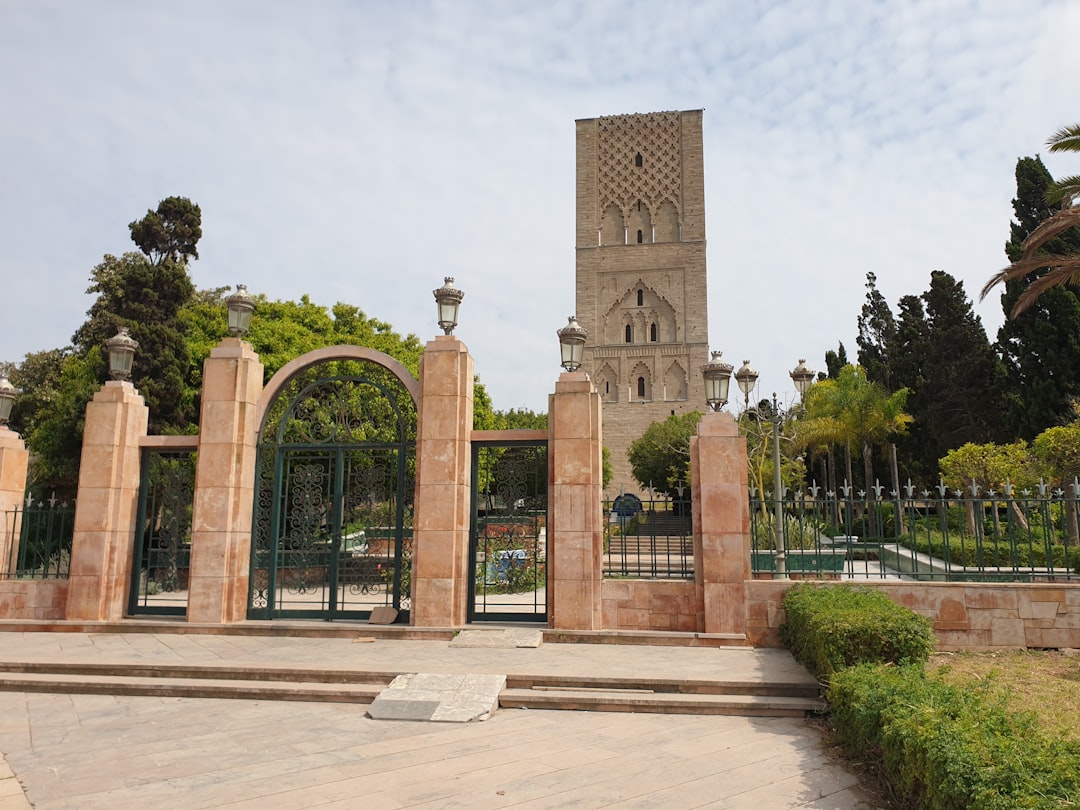
The most important tombs are those of Abu al-Hassan himself and his favorite, the sultana Shams ad-Duha, a woman of Christian origin whose tomb is decorated with an Arabic inscription of rare calligraphic quality. Approaching these structures allows one to observe how the Marinids combined Berber, Andalusian, and Eastern construction techniques into an original architectural language, recognizable in the details of the capitals, the proportions of the portals, and the choice of materials.
The nature as an architectural element
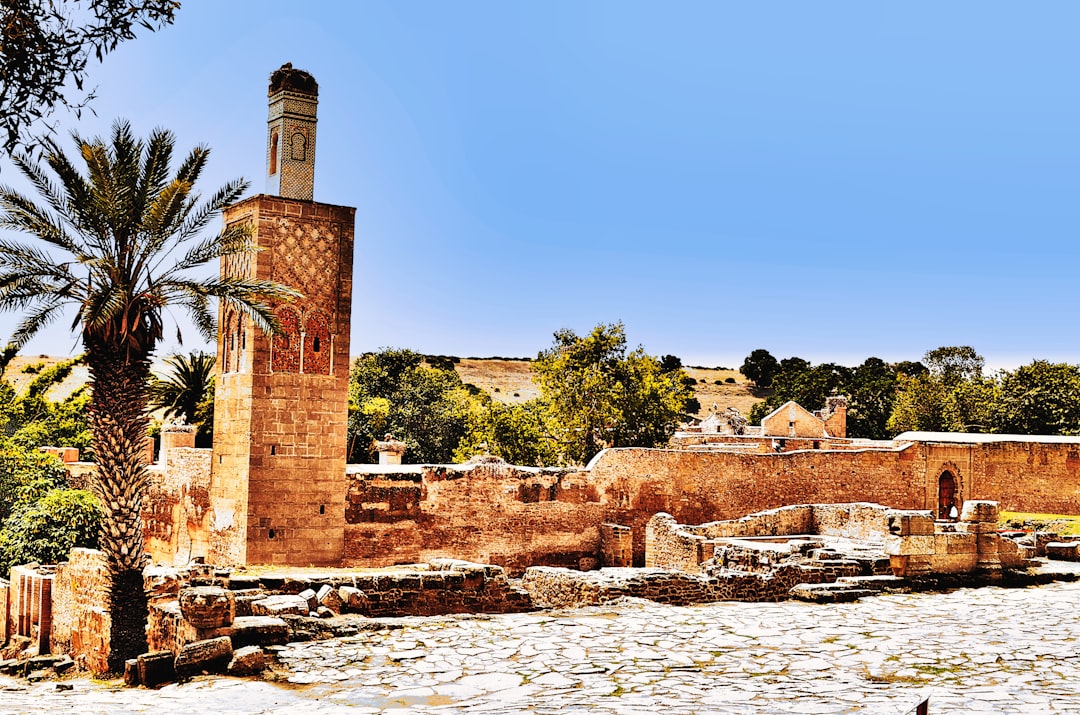
Chellah is not a site preserved under glass: it is a living place, where nature has reclaimed the built spaces with a force that no restoration has attempted to contain completely. Wild figs grow directly in the cracks of the walls, their roots widen the stones and the branches cast shade on the tombs. In spring, the inner garden is covered with wildflowers — red poppies, daisies, aromatic herbs — that contrast with the ochre color of the stone.
The storks, which nest on the tops of the minarets and towers every year between February and July, have become such a characteristic presence that they are almost a symbol of the site. The nests are enormous, built over successive seasons, and the sound of their beaks clacking — the characteristic courtship sound of the storks — can be heard from every corner of the enclosure. This cohabitation between ruins and wildlife gives Chellah an atmosphere that museum-like sites rarely manage to convey.
Practical Information for the Visit
Chellah is easily reachable on foot from the center of Rabat, walking down Avenue Yacoub el-Mansour south for about twenty minutes, or by taxi from the medina. The entrance ticket costs about 10 Moroccan dirhams, a symbolic amount. The site is open every day, generally from 8:30 until sunset, but it is advisable to check the hours locally as they may vary depending on the season and Islamic holidays.
The best time to visit is early in the morning, when the slanting light enhances the textures of the stone and there are still few tourists. Wearing comfortable shoes is essential: the internal paths are partly unpaved and uneven. A thorough visit takes about an hour and a half, but those who want to sit and observe the storks or draw the architectural details can easily spend two or three hours without realizing it.


