
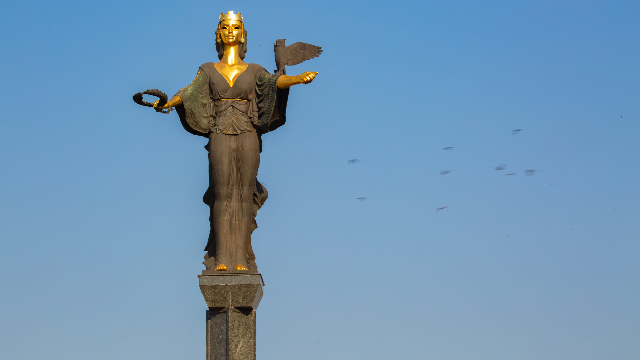

The Statue of St. Sophia is one of Sofia's most recognizable symbols and is a tribute to the city and its history. Commissioned to celebrate the millennium and inaugurated in 2000, the statue is the work of sculptor Georgi Chapkanov and has become a central landmark for the Bulgarian capital.
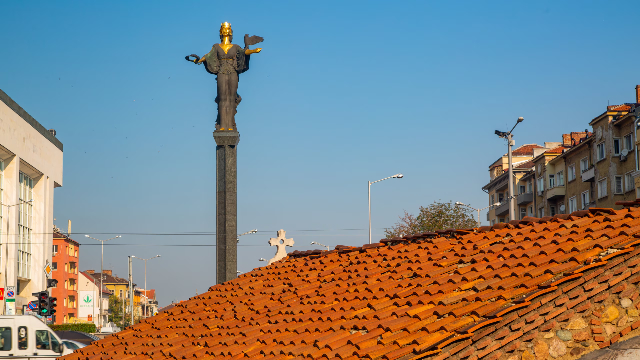
Description of the Statue
High 8 meters and placed on a pedestal that reaches 16 meters, the statue depicts a young woman who embodies both St. Sophia and an abstract idea of greatness and wisdom. Among the most significant symbolic details:
- Crown on a fortress wall: Symbol of power and protection.
- Lamen crown in the right hand: Represents victory and success.
- Wolf in the left hand: Emblem of wisdom, recalling classical culture and the link between Sophia and knowledge.
Significance and History
.The statue has a double symbolic value:
.- Tribute to St. Sophia, the patron saint of the city, who embodies faith and divine protection.
- Guardian of the State, symbolizing the protection of the nation and the rebirth of the country after the communist period.
It's location is not accidental: it was erected in the center of Sofia, right near the Presidential Palace and the Sveta Nedelya crossroads, as a symbol of freedom and peace, replacing the Statue of Lenin that once dominated the same area.
How to Reach It
The statue is located in full city center, just 240 meters from Sveta Nedelya Square. You can reach it in:
- 3-minute walk from Sveta Nedelya Church.
- Nearest metro stop: Serdika, easily accessible from anywhere in the city.
A Photogenic Point
.Thanks to its grandeur and central location, the St. Sophia Statue is one of the most photographed places in the capital. Its modern urban backdrop and its proximity to other monuments make this a great spot to capture the beauty of the city.
What to See Nearby
In addition to the statue, there are many interesting attractions nearby:
- The Presidential Palace: One of the most important buildings in Sofia.
- The Church of Sveta Nedelya: A short walk from the statue.
- The Roman ruins of Serdica: An impressive archaeological site that links Sofia's Roman past with the present.
- Boulevard Vitosha: The main pedestrian street for shopping and relaxation.
A Symbol of Modern Sofia
.The Statue of St. Sophia represents not only a tribute to the city's past, but also a symbol of its transformation and modernity. It is a must-see for those who want to understand the deeper meaning of the Bulgarian capital and its connection to wisdom, faith, and rebirth.
Don't forget to take a photo and enjoy the vibrant atmosphere of the city center as you admire this majestic work!


